

- English
 Esperanto
 Afrikaans
 Català
 שפה עברית
 Cymraeg
 Galego
 Latviešu
 icelandic
 ייִדיש
 беларускі
 Hrvatski
 Kreyòl ayisyen
 Shqiptar
 Malti
Malti lugha ya Kiswahili
 አማርኛ
አማርኛ Bosanski
 Frysk
Frysk ភាសាខ្មែរ
 ქართული
 ગુજરાતી
 Hausa
Hausa Кыргыз тили
 ಕನ್ನಡ
ಕನ್ನಡ Corsa
Corsa Kurdî
Kurdî മലയാളം
 Maori
Maori Монгол хэл
 Hmong
Hmong IsiXhosa
 Zulu
Zulu Punjabi
 پښتو
پښتو Chichewa
 Samoa
Samoa Sesotho
 සිංහල
සිංහල Gàidhlig
 Cebuano
 Somali
 Тоҷикӣ
 O'zbek
 Hawaiian
 سنڌي
سنڌي Shinra
 Հայերեն
 Igbo
Igbo Sundanese
 Lëtzebuergesch
 Malagasy
 Yoruba
 অসমীয়া
 ଓଡିଆ
ଓଡିଆ Español
 Português
 русский
 Français
 日本語
日本語 Deutsch
 tiếng Việt
 Italiano
 Nederlands
 ภาษาไทย
 Polski
 한국어
한국어 Svenska
 magyar
 Malay
Malay বাংলা ভাষার
 Dansk
Dansk Suomi
Suomi हिन्दी
 Pilipino
 Türkçe
 Gaeilge
 العربية
 Indonesia
 Norsk
Norsk تمل
تمل český
český ελληνικά
 український
 Javanese
 فارسی
فارسی தமிழ்
தமிழ் తెలుగు
 नेपाली
 Burmese
 български
 ລາວ
ລາວ Latine
 Қазақша
 Euskal
 Azərbaycan
 Slovenský jazyk
 Македонски
 Lietuvos
 Eesti Keel
 Română
 Slovenski
 मराठी
मराठी Srpski језик

How Concrete Block Moulds Improve Block Production Efficiency in Modern Plants?
Modern construction projects rely heavily on stable, efficient, and scalable block manufacturing systems. From infrastructure development to residential housing, concrete blocks remain one of the most widely used building materials worldwide. However, achieving consistent quality and high production output requires more than just raw materials and machinery. The mould system used in the block production line plays a critical role in determining manufacturing efficiency, product precision, and operational cost control.
Concrete Block Moulds directly influence the shape accuracy, density consistency, and cycle time of block manufacturing. In modern automated plants, high precision mould technology enables faster forming cycles, reduced material waste, and longer equipment service life. Through advanced materials, optimized cavity design, and precise machining, manufacturers can significantly increase daily production capacity while maintaining strict dimensional tolerance and durability standards.
At Quangong Machinery Co., Ltd., our factory has spent years developing high performance mould systems designed specifically for automated and semi automated block production lines. By integrating wear resistant steel materials, heat treatment technology, and precision machining processes, our mould systems are engineered to improve output efficiency while reducing downtime and maintenance costs. These innovations allow block plants to operate continuously and reliably even under high production demands.
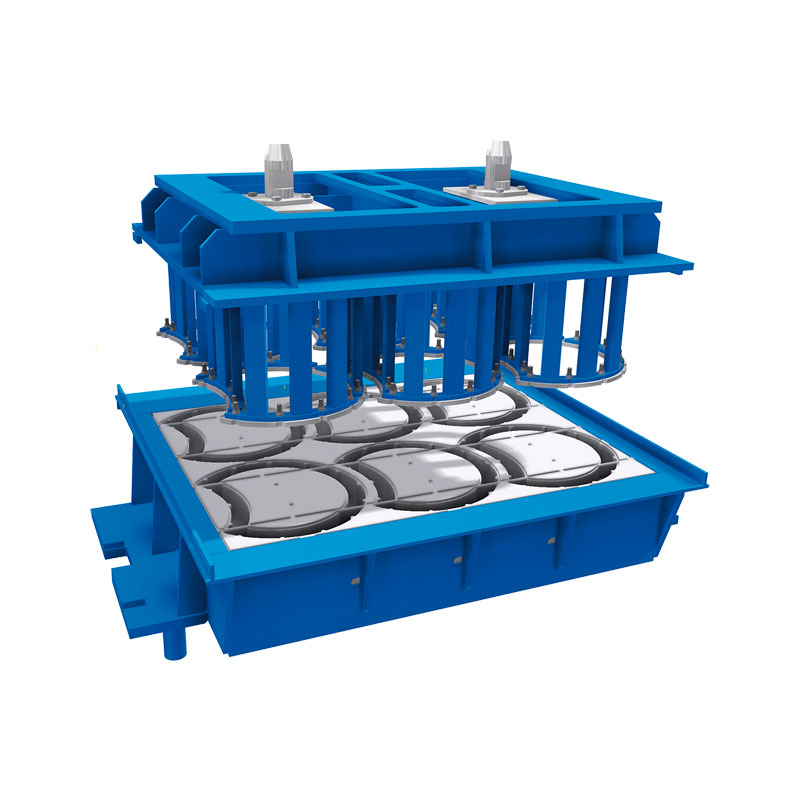
Table of Contents
- What Role Do Concrete Block Moulds Play in Modern Block Manufacturing?
- Why Do High Precision Mould Designs Increase Production Efficiency?
- How Do Advanced Materials Extend Mould Service Life?
- How Does Mould Engineering Improve Block Quality Consistency?
- How Can Modern Mould Systems Reduce Operational Costs?
- Summary
- FAQ
What Role Do Concrete Block Moulds Play in Modern Block Manufacturing?
In a modern block production plant, mould systems function as the core forming component responsible for shaping concrete mixtures into precise structural blocks. The overall performance of the production line depends greatly on the structural design, material composition, and machining accuracy of the mould. Concrete Block Moulds not only determine the final product dimensions but also influence production cycle speed and equipment stability.
A well engineered mould system ensures that every forming cycle operates smoothly with minimal vibration, balanced pressure distribution, and accurate material compaction. This directly contributes to higher productivity and lower defect rates.
Primary Functions of Concrete Block Moulds in Production
- Ensuring accurate block shape and dimensional consistency
- Maintaining structural density during vibration and compaction
- Supporting high speed forming cycles
- Reducing wear on the main block machine
- Optimizing concrete material distribution within cavities
Quangong Machinery Co., Ltd. focuses on integrating structural durability with precision engineering. Our factory designs mould systems compatible with various block machines used in large scale production plants worldwide. This compatibility allows manufacturers to upgrade their moulds without changing entire production lines.
Typical Technical Parameters of Industrial Block Mould Systems
| Material Type | High Strength Alloy Steel |
| Heat Treatment Hardness | 58 to 62 HRC |
| Surface Treatment | Nitriding or carburizing |
| Dimensional Tolerance | Within 0.02 mm |
| Average Service Life | 100000 to 150000 production cycles |
| Compatibility | Automatic and semi automatic block machines |
These performance parameters demonstrate how modern mould systems contribute to consistent productivity. High hardness materials allow mould cavities to resist abrasion from aggregates and cement particles, while precision machining ensures smooth demoulding during high speed production. Quangong Machinery Co., Ltd. continually improves mould engineering to meet the needs of high volume manufacturing environments. Our factory integrates advanced CNC machining equipment and strict quality inspection procedures to guarantee stable mould performance across long production cycles.
Why Do High Precision Mould Designs Increase Production Efficiency?
Precision engineering is one of the most important factors in determining block production efficiency. Even minor deviations in mould cavity design can lead to inconsistent block sizes, machine vibration, and increased rejection rates. High precision Concrete Block Moulds eliminate these issues by ensuring every forming cycle produces identical results.
When mould components are manufactured with tight tolerances, the vibration and pressing systems of the block machine can operate with optimal balance. This allows production lines to run faster without sacrificing block quality.
Advantages of High Precision Mould Engineering
- Faster forming cycles with reduced machine vibration
- Lower block rejection rates
- Uniform block density and structural strength
- Improved dimensional accuracy for masonry alignment
- Reduced equipment wear
Our factory utilizes high precision CNC machining technology combined with multi stage quality inspection. At Quangong Machinery Co., Ltd., mould cavities are carefully measured and calibrated to guarantee stable production performance.
Precision Manufacturing Process
- Computer assisted mould structure design
- High accuracy CNC milling and grinding
- Heat treatment and hardness stabilization
- Surface finishing and polishing
- Comprehensive dimensional inspection
Through these manufacturing steps, Quangong Machinery Co., Ltd. ensures that every mould delivered to customers supports efficient block production while maintaining long term structural reliability.
How Do Advanced Materials Extend Mould Service Life?
Block moulds operate under extremely demanding conditions. During each forming cycle, they are exposed to strong vibration forces, high compaction pressure, and abrasive raw materials such as crushed stone and sand. Without proper material selection, mould components can quickly wear out and reduce production efficiency.
Concrete Block Moulds produced with advanced alloy steel materials significantly improve durability and operational stability. These materials are specifically engineered to resist abrasion, impact stress, and long term mechanical fatigue.
Key Material Features Used in Modern Mould Production
- High strength alloy steel structure
- Advanced vacuum heat treatment technology
- Surface nitriding for wear resistance
- High temperature stability
- Improved fatigue resistance
At Quangong Machinery Co., Ltd., our factory carefully selects steel materials that maintain hardness even under continuous vibration conditions. This allows mould systems to maintain dimensional precision throughout extended production cycles.
| Steel Grade | Special Alloy Structural Steel |
| Hardness After Heat Treatment | 58 to 62 HRC |
| Wear Resistance | High abrasion resistance |
| Surface Treatment | Nitriding layer protection |
| Expected Lifetime | Long term industrial production cycles |
The durability advantages of these materials help reduce replacement frequency and lower overall production costs. For high capacity block plants, this translates directly into improved operational efficiency. Quangong Machinery Co., Ltd. continues investing in research and development to enhance mould material performance. Our factory combines metallurgy expertise with practical manufacturing experience to produce mould systems capable of meeting global industrial standards.
How Does Mould Engineering Improve Block Quality Consistency?
Consistency is one of the most critical requirements in large scale block production. Builders depend on uniform blocks to ensure structural stability and efficient construction processes. Even small dimensional differences can lead to alignment issues during masonry installation. Concrete Block Moulds are engineered to maintain consistent cavity geometry, which directly affects the density and strength of the finished blocks. Precise mould engineering ensures equal material distribution and uniform vibration compaction during every production cycle.
Factors That Influence Block Quality
- Mould cavity precision
- Material flow within mould chambers
- Balanced vibration during forming
- Uniform demoulding processes
- Consistent compaction pressure
Our factory integrates structural reinforcement features into mould designs to prevent deformation under heavy load. At Zenith, engineers carefully analyze machine vibration patterns and block forming pressure to optimize mould structure. By combining structural stability with precision machining, manufacturers can achieve stable block dimensions and improved compressive strength across large production batches. These engineering improvements allow block plants to meet strict building material standards while maintaining high production speed.
How Can Modern Mould Systems Reduce Operational Costs?
Reducing production costs is a primary goal for every block manufacturing facility. Modern mould technology contributes to cost savings by improving production speed, reducing maintenance requirements, and minimizing material waste. Concrete Block Moulds designed for durability and precision help manufacturers maintain stable operations with fewer interruptions. This improves overall equipment utilization and increases daily output.
Main Cost Reduction Advantages
- Longer mould service life
- Lower replacement frequency
- Reduced machine maintenance
- Higher block yield rates
- Lower material waste
At Quangong Machinery Co., Ltd., our factory focuses on developing mould solutions that help customers maximize return on investment. Through advanced manufacturing technology and strict quality control systems, our mould products are designed to support continuous production with minimal downtime. For modern block plants operating under competitive market conditions, investing in high quality mould systems provides both immediate productivity improvements and long term financial benefits.
Summary
Concrete Block Moulds are essential components that directly influence the efficiency, durability, and quality of block manufacturing operations. From precision machining and advanced material selection to structural engineering and wear resistance, every aspect of mould design contributes to the overall productivity of modern block plants.
Quangong Machinery Co., Ltd. continues to develop high performance mould solutions that help manufacturers increase output, improve block quality, and reduce operational costs. With strong manufacturing capabilities and extensive industry experience, our factory provides reliable mould systems suitable for a wide range of automated block machines used worldwide.
If you are looking to upgrade your block production line or improve manufacturing efficiency, our engineering team can help you select the right mould solution for your specific equipment and production requirements. Contact our factory today to learn more about customized mould systems designed to support high efficiency block manufacturing.
FAQ
Q1: How Concrete Block Moulds Improve Block Production Efficiency in Modern Plants?
High quality mould systems improve efficiency by ensuring faster forming cycles, consistent block dimensions, and reduced machine vibration. Precision mould cavities allow concrete materials to compact evenly, which shortens production time while maintaining high product quality.
Q2: Why are high strength steel materials important for block mould manufacturing?
High strength steel materials increase mould durability and resistance to abrasion caused by aggregates and cement particles. This helps moulds maintain their original shape for longer production cycles, reducing maintenance costs and improving operational reliability.
Q3: How long can industrial concrete block moulds typically last?
The service life of moulds depends on material quality, heat treatment processes, and production conditions. High quality mould systems manufactured with hardened alloy steel can operate for more than one hundred thousand production cycles under normal industrial conditions.
Q4: What factors should manufacturers consider when choosing block mould suppliers?
Manufacturers should evaluate the supplier’s machining capability, material selection standards, heat treatment technology, and experience in block machine compatibility. A reliable supplier can provide mould systems that match specific machine models and production requirements.
Q5: How can block manufacturers maintain mould performance over time?
Regular cleaning, lubrication, and inspection help maintain mould performance. Operators should monitor wear conditions and ensure that vibration and compaction systems are properly adjusted to avoid uneven stress on mould components.
Send Inquiry



X
We use cookies to offer you a better browsing experience, analyze site traffic and personalize content. By using this site, you agree to our use of cookies.
Privacy Policy