

- English
 Esperanto
 Afrikaans
 Català
 שפה עברית
 Cymraeg
 Galego
 Latviešu
 icelandic
 ייִדיש
 беларускі
 Hrvatski
 Kreyòl ayisyen
 Shqiptar
 Malti
Malti lugha ya Kiswahili
 አማርኛ
አማርኛ Bosanski
 Frysk
Frysk ភាសាខ្មែរ
 ქართული
 ગુજરાતી
 Hausa
Hausa Кыргыз тили
 ಕನ್ನಡ
ಕನ್ನಡ Corsa
Corsa Kurdî
Kurdî മലയാളം
 Maori
Maori Монгол хэл
 Hmong
Hmong IsiXhosa
 Zulu
Zulu Punjabi
 پښتو
پښتو Chichewa
 Samoa
Samoa Sesotho
 සිංහල
සිංහල Gàidhlig
 Cebuano
 Somali
 Тоҷикӣ
 O'zbek
 Hawaiian
 سنڌي
سنڌي Shinra
 Հայերեն
 Igbo
Igbo Sundanese
 Lëtzebuergesch
 Malagasy
 Yoruba
 অসমীয়া
 ଓଡିଆ
ଓଡିଆ Español
 Português
 русский
 Français
 日本語
日本語 Deutsch
 tiếng Việt
 Italiano
 Nederlands
 ภาษาไทย
 Polski
 한국어
한국어 Svenska
 magyar
 Malay
Malay বাংলা ভাষার
 Dansk
Dansk Suomi
Suomi हिन्दी
 Pilipino
 Türkçe
 Gaeilge
 العربية
 Indonesia
 Norsk
Norsk تمل
تمل český
český ελληνικά
 український
 Javanese
 فارسی
فارسی தமிழ்
தமிழ் తెలుగు
 नेपाली
 Burmese
 български
 ລາວ
ລາວ Latine
 Қазақша
 Euskal
 Azərbaycan
 Slovenský jazyk
 Македонски
 Lietuvos
 Eesti Keel
 Română
 Slovenski
 मराठी
मराठी Srpski језик

How Concrete Block Moulds Influence Block Machine Performance?
In the world of concrete block manufacturing, the block making machine often takes center stage as the star of the production line. However, seasoned industry professionals know that the true heart of any efficient operation lies in the quality and precision of its concrete block moulds. The mould is the unsung hero; it is the point of contact where raw material, vibration, and pressure transform into a saleable, high-quality block. A machine, regardless of its horsepower or automation level, is only as good as the mould it drives. If the mould is subpar, even the most sophisticated machinery will produce inconsistent, low-strength blocks, leading to increased waste and reduced profitability.
This intrinsic relationship dictates that optimizing your production output requires a deep understanding of how moulds function within the machine ecosystem. At Quangong Machinery Co., Ltd., we have spent two decades refining this relationship. The synergy between a robust machine frame and a precisely engineered mould determines cycle times, density consistency, and the overall lifespan of your equipment. In this comprehensive guide, we will dissect the technical parameters and operational nuances that prove why investing in superior moulds is the most strategic decision for your block-making business.
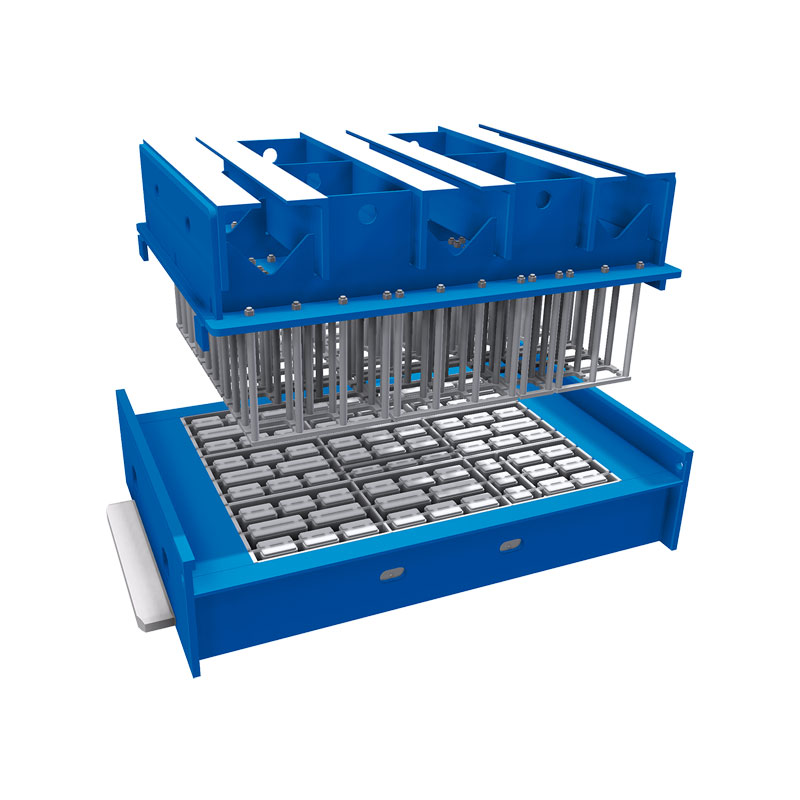
Table of Contents
Why Are Concrete Block Moulds Critical for Machine Efficiency?
Machine efficiency in concrete block production is not merely about how fast the hydraulic system cycles; it is about the consistency of output with minimal downtime. The mould is the interface that dictates this consistency. When we talk about efficiency at our factory, we look at two key metrics: 'fill efficiency' and 'demolding efficiency'. A poorly designed Concrete Block Moulds creates friction—literally and figuratively. If the mould taper is incorrect, the material does not release cleanly, causing the machine to work harder, consume more energy, and potentially stall.
Furthermore, the precision of the mould liner plates determines how well the vibration from the machine table transfers to the concrete mix. At Quangong Machinery Co., Ltd., we engineer our moulds with specific hardness gradients to ensure that vibration energy is absorbed by the mix rather than dissipated by the mould structure. This direct transfer is vital for achieving high-density blocks in a shorter vibration time, which directly correlates to machine efficiency. Here are the critical efficiency parameters influenced by moulds:
- Vibration Transmission Rate: High-quality steel moulds with tight tolerances transmit 95-98% of machine vibration into the mix, reducing required vibration time.
- Material Flow Geometry: The internal corner radii and surface finish of the mould boxes ensure that concrete flows uniformly, preventing voids and reducing the machine's compaction effort.
- Guide Pin Alignment: Precision-ground guide pins and bushings ensure the mould head aligns perfectly with the mould box every cycle, reducing wear on the machine's main cylinder and guide columns.
- Heat Treatment Consistency: Moulds that have been stress-relieved prevent warping during operation. A warped mould forces the machine to compensate unevenly, leading to premature bearing and guide wear.
In essence, the mould acts as the programmable logic controller (PLC) of the physical process. A superior mould from our factory allows the machine to operate within its optimal parameters. When the mould is precise, the machine does not need to over-vibrate or over-pressurize to achieve block density. This conservation of energy and mechanical stress extends the service life of every component on the machine, from the hydraulic pumps to the vibration motors. At Quangong Machinery Co., Ltd., we view the mould not as an accessory, but as the primary tool that unlocks the full potential of the block making machine.
How Do Mould Specifications Affect Cycle Time and Throughput?
Throughput is the lifeblood of any concrete products plant, and cycle time is the metric that defines it. While machine hydraulics determine the speed of movement, the mould determines the speed of 'dwell'—the time needed for the material to settle and compact. High-precision Concrete Block Moulds significantly reduce this dwell time. For instance, moulds manufactured with a specific chrome plating thickness reduce the coefficient of friction. This means that during the stripping phase (when the mould rises after compaction), the block releases instantly without sticking or tearing.
Consider the critical specification of 'Taper' on the mould sidewalls. A taper of 2 to 3 degrees is standard, but for high-speed machines, our factory optimizes this taper based on the aggregate size. If the taper is too shallow, the blocks drag on the mould walls during lifting, increasing the demolding time and risking green block deformation. If it is too steep, you lose material density at the bottom of the block. The table below illustrates how specific mould specifications directly impact the production cycle:
| Mould Specification | Technical Parameter (Our Factory Standard) | Impact on Cycle Time & Throughput |
| Hard Chrome Plating Thickness | 0.08mm - 0.12mm on working surfaces | Reduces friction by 40%; allows stripping speed to increase by 0.5 seconds per cycle. |
| Magnetizable Steel Grade | DC53 / 9CrSi Heat-treated to HRC 58-62 | Maintains dimensional stability under magnetic force; prevents micro-shifts that slow down cycle consistency. |
| Vent Hole Diameter & Pattern | Optimized CFD design with 3mm-5mm vents | Enables air escape 30% faster; allows for faster initial vibration onset, reducing overall cycle time. |
| Bushing Material | Dura-Bronx or equivalent oil-impregnated bronze | Ensures smooth guiding during the 3mm-5mm stripping phase; eliminates jerky movements that slow down the cycle. |
Beyond the raw numbers, the geometrical accuracy of the mould pockets determines how many blocks are produced per pallet. If the mould pockets are not perfectly square and parallel, the machine's hydraulic head cannot apply even pressure. This uneven pressure often requires the operator to slow down the cycle to prevent block distortion. By using laser-cut and wire-edm processed moulds, Quangong Machinery Co., Ltd. guarantees that every cavity is identical. This uniformity allows the machine to run at its maximum rated speed, achieving up to 15% higher throughput compared to using generic or low-quality moulds. Ultimately, the mould is the throttle of your production line; a high-performance mould lets you run at full speed.
What Role Does Mould Material Play in Block Quality and Machine Wear?
The material composition of Concrete Block Moulds is a balancing act between hardness to resist abrasion and toughness to withstand the constant impact of vibration. Low-quality moulds often use mild steel that wears out quickly, creating rounded edges. These rounded edges produce blocks with 'feather edges'—weak corners that crumble during handling. On the other hand, materials that are too hard but brittle can crack under the stress of high-frequency vibration, leading to catastrophic machine damage if fragments enter the mechanism.
At Quangong Machinery Co., Ltd., our approach to metallurgy is holistic. We use a combination of wear-resistant steel for the liner plates and high-tensile alloy steel for the frame. This combination ensures that the mould maintains its sharpness for the lifespan of millions of cycles. The quality of the material directly protects the machine. How? A mould made from premium steel maintains its flatness. A flat mould base ensures that the force from the machine's compression head is distributed evenly. If the mould base warps, the machine's compression head experiences uneven resistance, which can twist the main columns and cause hydraulic drift over time. Below are the key material properties we focus on:
- Abrasion Resistance (Wear Rate): Measured by the depth of wear per 100,000 cycles. Our factory aims for less than 0.01mm wear on liner plates, ensuring block dimensional accuracy remains within +/- 1mm for millions of cycles.
- Impact Toughness (Charpy V-Notch): Ensures the steel absorbs the shock of vibration without micro-fracturing. This protects the machine's vibratory table from reflected shock waves.
- Surface Hardness (Rockwell C Scale): Targeted HRC 58-62 for wear parts. This hardness prevents the aggregate from gouging the mould surface, which would otherwise create rough patches that increase machine vibration load.
Furthermore, the material choice affects the maintenance schedule of the machine. High-quality materials mean less frequent mould changes, which translates to less downtime for the machine. When a mould wears out, the machine often has to work harder to achieve density, putting strain on the motors. By using durable, precision-engineered Concrete Block Moulds from our facility, you are effectively insulating your main machine from operational stress. The machine operates smoothly, the bearings last longer, and the hydraulic oil stays cleaner because the system isn't fighting against a worn-out tool. It is a direct correlation: better mould metallurgy equals lower machine maintenance costs and superior block quality.
Summary: The Mould-Machine Symbiosis
The performance of a block making machine is inextricably linked to the quality of the concrete block moulds it utilizes. From cycle time and energy consumption to the structural integrity of the final product, the mould dictates the ceiling of operational success. Throughout this article, we have established that precision engineering, superior metallurgy, and exacting specifications in moulds are not optional extras—they are fundamental requirements for a profitable and sustainable block manufacturing operation.
At Zenith, we understand that your machine is a significant investment, and protecting that investment starts with the tooling. Our factory produces moulds that act as a perfect extension of our machines, ensuring that you achieve the highest possible return on your investment. By choosing our integrated solutions, you are ensuring that every cycle delivers consistent, high-strength blocks while minimizing wear on your capital equipment. Do not let substandard tooling hold back your production.
Ready to Optimize Your Production Line?
Contact Quangong Machinery Co., Ltd. today to discuss your specific block dimensions and production targets. Let our factory engineer the perfect Concrete Block Moulds to unlock the full speed and efficiency of your block making machine. Request a quote or a technical consultation now.
Frequently Asked Questions (FAQ)
How Concrete Block Moulds Influence the Performance of Block Making Machines in terms of energy consumption?
Concrete block moulds directly influence energy consumption by determining the efficiency of vibration transfer. High-precision moulds manufactured by Quangong Machinery Co., Ltd. are designed with exact material specifications that absorb minimal vibration energy. This means that the vibration motors on the machine can operate at lower amplitudes to achieve the same compaction density. Conversely, a low-quality, heavy, or poorly balanced mould acts as a damper, forcing the machine to use more electrical power to vibrate the mould and mix. Over a full production day, this energy inefficiency can translate into a significant increase in operational costs. Precision moulds ensure that the machine's power is used to compact concrete, not to shake the mould itself.
How Concrete Block Moulds Influence the Performance of Block Making Machines during the curing process?
While moulds are not directly involved in the curing chamber, they heavily influence the "green strength" of blocks entering the curing process. The mould's design, specifically its compaction ratio and edge sharpness, determines how well the concrete particles are interlocked directly after demolding. If the mould allows for optimal compaction, the blocks exit the machine with higher structural integrity. This high green strength means they can be stacked higher on racks without deformation, allowing for better air flow during curing. Poorly designed Concrete Block Moulds produce soft, fragile blocks that may slump on the pallet, leading to poor curing results and lower final strength. Therefore, the mould sets the foundation for successful curing by ensuring the block physically survives the journey into the kiln.
How Concrete Block Moulds Influence the Performance of Block Making Machines regarding product changeover time?
The design of the mould system drastically affects how quickly you can switch production from one block type to another. In modern machines from Quangong Machinery Co., Ltd., moulds equipped with quick-release clamps and standardized guide rail systems allow for changeovers in under 30 minutes. However, this speed is only possible if the moulds themselves are manufactured with extreme precision. If the mould's locating pins and bushings are not machined to micron-level tolerances, the changeover process becomes a struggle of alignment, forcing operators to manually adjust settings and wasting valuable production time. High-quality moulds guarantee that when you install them, the machine recognizes the tooling immediately, minimizing downtime and maximizing productive hours.
How Concrete Block Moulds Influence the Performance of Block Making Machines in producing specialty products like pavers?
Specialty products like interlocking pavers or split-faced blocks require complex mould geometries. The performance of the machine in producing these items hinges on the mould's ability to handle intricate details without causing block damage during ejection. For split-faced blocks, the mould must have precisely placed splitting inserts. If these inserts are misaligned or made of low-grade steel, the machine's splitting mechanism will experience uneven resistance, potentially damaging the machine's splitting head. Our factory ensures that specialty Concrete Block Moulds are engineered with hardened inserts and precise draft angles that allow the machine to perform specialty operations at the same speed as standard block production, thereby maintaining high throughput even for complex products.
How Concrete Block Moulds Influence the Performance of Block Making Machines in maintaining dimensional accuracy over time?
Dimensional accuracy over millions of cycles is a function of the mould's resistance to wear and fatigue. As a mould wears, the block dimensions change. If the mould wears unevenly, the machine's control system must constantly be recalibrated to account for the varying material volume required to fill the larger cavities. This constant recalibration puts stress on the machine's sensors and PLC logic. High-quality Concrete Block Moulds from Quangong Machinery Co., Ltd., made with through-hardened steel, maintain their original dimensions for significantly longer. This stability means the machine operates in a steady state, requiring fewer adjustments, producing consistent blocks, and reducing the mental load on operators who otherwise would be constantly checking for size variations.
Send Inquiry



X
We use cookies to offer you a better browsing experience, analyze site traffic and personalize content. By using this site, you agree to our use of cookies.
Privacy Policy