

- English
 Esperanto
 Afrikaans
 Català
 שפה עברית
 Cymraeg
 Galego
 Latviešu
 icelandic
 ייִדיש
 беларускі
 Hrvatski
 Kreyòl ayisyen
 Shqiptar
 Malti
Malti lugha ya Kiswahili
 አማርኛ
አማርኛ Bosanski
 Frysk
Frysk ភាសាខ្មែរ
 ქართული
 ગુજરાતી
 Hausa
Hausa Кыргыз тили
 ಕನ್ನಡ
ಕನ್ನಡ Corsa
Corsa Kurdî
Kurdî മലയാളം
 Maori
Maori Монгол хэл
 Hmong
Hmong IsiXhosa
 Zulu
Zulu Punjabi
 پښتو
پښتو Chichewa
 Samoa
Samoa Sesotho
 සිංහල
සිංහල Gàidhlig
 Cebuano
 Somali
 Тоҷикӣ
 O'zbek
 Hawaiian
 سنڌي
سنڌي Shinra
 Հայերեն
 Igbo
Igbo Sundanese
 Lëtzebuergesch
 Malagasy
 Yoruba
 অসমীয়া
 ଓଡିଆ
ଓଡିଆ Español
 Português
 русский
 Français
 日本語
日本語 Deutsch
 tiếng Việt
 Italiano
 Nederlands
 ภาษาไทย
 Polski
 한국어
한국어 Svenska
 magyar
 Malay
Malay বাংলা ভাষার
 Dansk
Dansk Suomi
Suomi हिन्दी
 Pilipino
 Türkçe
 Gaeilge
 العربية
 Indonesia
 Norsk
Norsk تمل
تمل český
český ελληνικά
 український
 Javanese
 فارسی
فارسی தமிழ்
தமிழ் తెలుగు
 नेपाली
 Burmese
 български
 ລາວ
ລາວ Latine
 Қазақша
 Euskal
 Azərbaycan
 Slovenský jazyk
 Македонски
 Lietuvos
 Eesti Keel
 Română
 Slovenski
 मराठी
मराठी Srpski језик

Is the Brick Machine Offline Cubic System the Ultimate Solution for High-Efficiency Concrete Block Production
In modern construction manufacturing, efficiency, automation, and precision are no longer optional—they are essential. The Brick Machine Offline Cubic System represents a breakthrough in automated concrete block production by separating cubing and stacking operations from the main forming line. This article explores how this system works, its core advantages, technical features, cost-efficiency benefits, and why leading manufacturers such as QGM are integrating intelligent offline cubic systems into advanced block production lines.
Whether you are upgrading an existing plant or planning a new automated concrete block facility, this comprehensive guide will help you understand why the offline cubic system is becoming the industry standard.
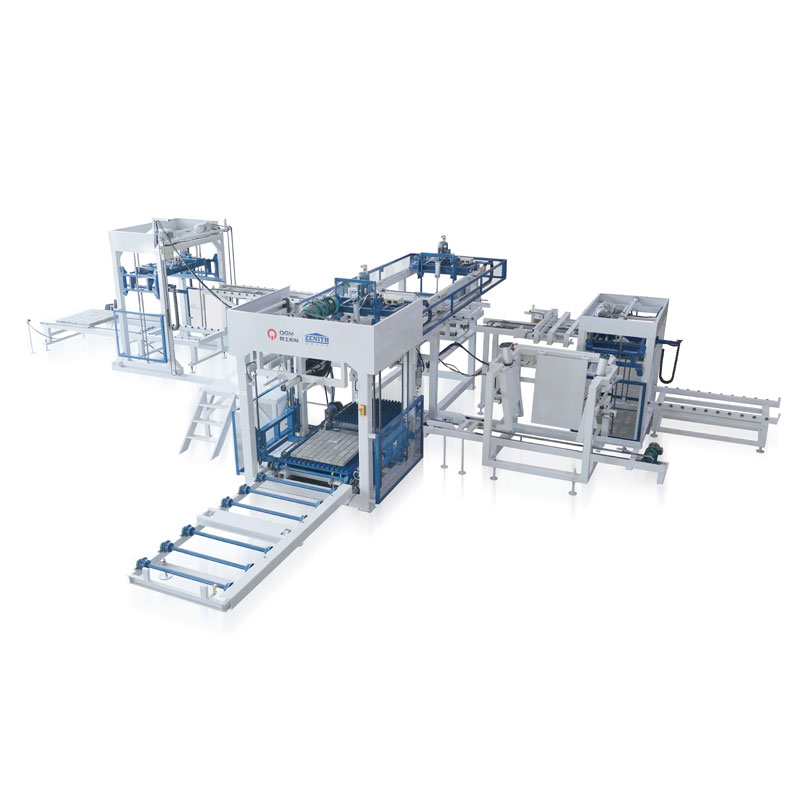
Table of Contents
- 1. What Is a Brick Machine Offline Cubic System?
- 2. How Does an Offline Cubic System Work?
- 3. Key Advantages Over Traditional Stacking Systems
- 4. Core Technical Features
- 5. Offline vs Online Cubic Systems Comparison
- 6. Industrial Applications
- 7. Return on Investment & Cost Efficiency
- 8. Integration with Modern Block Production Lines
- 9. Frequently Asked Questions
1. What Is a Brick Machine Offline Cubic System?
A Brick Machine Offline Cubic System is an automated brick stacking and packaging solution that operates independently from the main block forming machine. Instead of stacking blocks directly on the production line (online cubing), this system transfers cured or semi-cured blocks to a separate cubing station for automatic stacking, grouping, and strapping.
The system is designed to:
- Improve production flexibility
- Reduce downtime on the main forming machine
- Enhance stacking precision
- Optimize labor efficiency
- Enable continuous production
Leading manufacturers like QGM have developed intelligent offline cubic systems that combine robotics, servo control, and PLC automation to ensure seamless brick handling and packaging.
2. How Does an Offline Cubic System Work?
The offline cubic system typically follows these operational steps:
- Block Transfer: Finished blocks are transported from the curing area via conveyor or forklift.
- Buffer Storage: Blocks are temporarily stored to ensure continuous feeding.
- Automatic Alignment: Blocks are precisely aligned using servo-controlled positioning systems.
- Layer Formation: The system arranges blocks into pre-set patterns.
- Cubic Stacking: Robotic arms or mechanical stackers build stable cubic stacks.
- Strapping & Packaging: Automatic strapping machines secure the cube for transport.
Because the system is independent, the main brick machine can continue operating without interruption, significantly increasing overall plant productivity.
3. Key Advantages Over Traditional Stacking Systems
3.1 Increased Production Efficiency
Offline cubing eliminates bottlenecks in the main production line. While blocks are being stacked and packaged, the forming machine continues producing.
3.2 Flexible Production Scheduling
- Supports multi-shift production
- Handles different block types
- Allows independent maintenance
3.3 Reduced Labor Costs
Automation reduces manual stacking requirements, minimizing labor intensity and improving workplace safety.
3.4 Improved Stacking Quality
Precision-controlled stacking ensures stable cubes, reducing transportation damage.
4. Core Technical Features
| Feature | Description |
|---|---|
| PLC Intelligent Control | Fully automated control system with real-time monitoring |
| Servo Motor Positioning | High-precision alignment and stacking accuracy |
| Robotic Arm Integration | Flexible handling of different brick sizes |
| Automatic Strapping | Secure packaging for transport stability |
| Modular Design | Easy expansion and customization |
These advanced features make the system ideal for high-capacity concrete block production plants.
5. Offline vs Online Cubic Systems Comparison
| Parameter | Offline Cubic System | Online Cubic System |
|---|---|---|
| Production Continuity | Continuous production | Stops during stacking |
| Flexibility | High | Limited |
| Maintenance Impact | No effect on forming line | Affects entire line |
| Investment Cost | Higher initial investment | Lower initial cost |
| Long-term ROI | Higher | Moderate |
6. Industrial Applications
The Brick Machine Offline Cubic System is widely used in:
- Concrete hollow block production
- Paver brick manufacturing
- Solid brick production lines
- High-density construction material plants
It is especially suitable for large-scale automated factories targeting export markets and standardized pallet packaging.
7. Return on Investment & Cost Efficiency
Although the initial investment is higher, the long-term operational savings are substantial:
- 30–50% labor cost reduction
- Increased daily output
- Reduced product damage
- Lower downtime losses
Many manufacturers report ROI within 2–3 years, especially in high-capacity plants.
8. Integration with Modern Block Production Lines
Modern smart factories demand full automation integration. The offline cubic system seamlessly connects with:
- Automatic batching systems
- High-performance block forming machines
- Intelligent curing chambers
- ERP production management systems
With Industry 4.0 integration capabilities, manufacturers like QGM provide data-driven solutions for real-time monitoring and production optimization.
9. Frequently Asked Questions (FAQ)
Q1: Is the offline cubic system suitable for small factories?
It depends on production capacity. For low-output plants, manual stacking may suffice. However, for medium to large-scale operations, automation significantly improves efficiency.
Q2: Can the system handle different brick sizes?
Yes. Modern systems support programmable stacking patterns for multiple product types.
Q3: What maintenance does the system require?
Regular inspection of conveyors, robotic arms, and control systems ensures long-term reliability.
Q4: Does it reduce breakage during transportation?
Yes. Precision stacking and automatic strapping greatly enhance cube stability.
Q5: How long does installation take?
Depending on plant scale, installation typically ranges from several weeks to a few months.
Conclusion: Is the Brick Machine Offline Cubic System Worth the Investment?
The Brick Machine Offline Cubic System is a transformative solution for modern concrete block manufacturers. By separating stacking operations from the forming line, it enhances productivity, flexibility, and long-term profitability.
For manufacturers aiming to stay competitive in a rapidly evolving construction materials market, investing in advanced automation is no longer optional—it is strategic.
If you are planning to upgrade your concrete block production line or want to learn more about advanced automation solutions from QGM, contact us today to receive professional guidance and customized solutions tailored to your production needs.
Send Inquiry



X
We use cookies to offer you a better browsing experience, analyze site traffic and personalize content. By using this site, you agree to our use of cookies.
Privacy Policy