

- English
 Esperanto
 Afrikaans
 Català
 שפה עברית
 Cymraeg
 Galego
 Latviešu
 icelandic
 ייִדיש
 беларускі
 Hrvatski
 Kreyòl ayisyen
 Shqiptar
 Malti
Malti lugha ya Kiswahili
 አማርኛ
አማርኛ Bosanski
 Frysk
Frysk ភាសាខ្មែរ
 ქართული
 ગુજરાતી
 Hausa
Hausa Кыргыз тили
 ಕನ್ನಡ
ಕನ್ನಡ Corsa
Corsa Kurdî
Kurdî മലയാളം
 Maori
Maori Монгол хэл
 Hmong
Hmong IsiXhosa
 Zulu
Zulu Punjabi
 پښتو
پښتو Chichewa
 Samoa
Samoa Sesotho
 සිංහල
සිංහල Gàidhlig
 Cebuano
 Somali
 Тоҷикӣ
 O'zbek
 Hawaiian
 سنڌي
سنڌي Shinra
 Հայերեն
 Igbo
Igbo Sundanese
 Lëtzebuergesch
 Malagasy
 Yoruba
 অসমীয়া
 ଓଡିଆ
ଓଡିଆ Español
 Português
 русский
 Français
 日本語
日本語 Deutsch
 tiếng Việt
 Italiano
 Nederlands
 ภาษาไทย
 Polski
 한국어
한국어 Svenska
 magyar
 Malay
Malay বাংলা ভাষার
 Dansk
Dansk Suomi
Suomi हिन्दी
 Pilipino
 Türkçe
 Gaeilge
 العربية
 Indonesia
 Norsk
Norsk تمل
تمل český
český ελληνικά
 український
 Javanese
 فارسی
فارسی தமிழ்
தமிழ் తెలుగు
 नेपाली
 Burmese
 български
 ລາວ
ລາວ Latine
 Қазақша
 Euskal
 Azərbaycan
 Slovenský jazyk
 Македонски
 Lietuvos
 Eesti Keel
 Română
 Slovenski
 मराठी
मराठी Srpski језик

What Are the Most Energy-Efficient Auxiliary Machinery Components?
Energy efficiency has become one of the most critical performance benchmarks in modern industrial operations. As global manufacturing costs continue to rise and environmental regulations tighten, factories and production facilities are under growing pressure to reduce power consumption without compromising output quality. Auxiliary Machinery components sit at the heart of this challenge. These systems, often overlooked in traditional energy audits, account for a significant share of total facility energy consumption. Choosing the right components, built with advanced engineering and optimized for real-world operating conditions, can deliver measurable reductions in energy costs from day one.
At Quangong Machinery Co., Ltd., our engineering team has spent decades developing and refining Auxiliary Machinery solutions that meet the demands of high-output industrial environments. Our product lines are designed not only for mechanical reliability but for intelligent energy management. From servo-driven systems to smart cooling assemblies, our factory produces components that align with the priorities of today's energy-conscious plant managers and procurement specialists. This article provides a detailed breakdown of the most energy-efficient auxiliary machinery components available, the technical parameters that define their performance, and the practical reasons why upgrading these systems delivers long-term operational value.
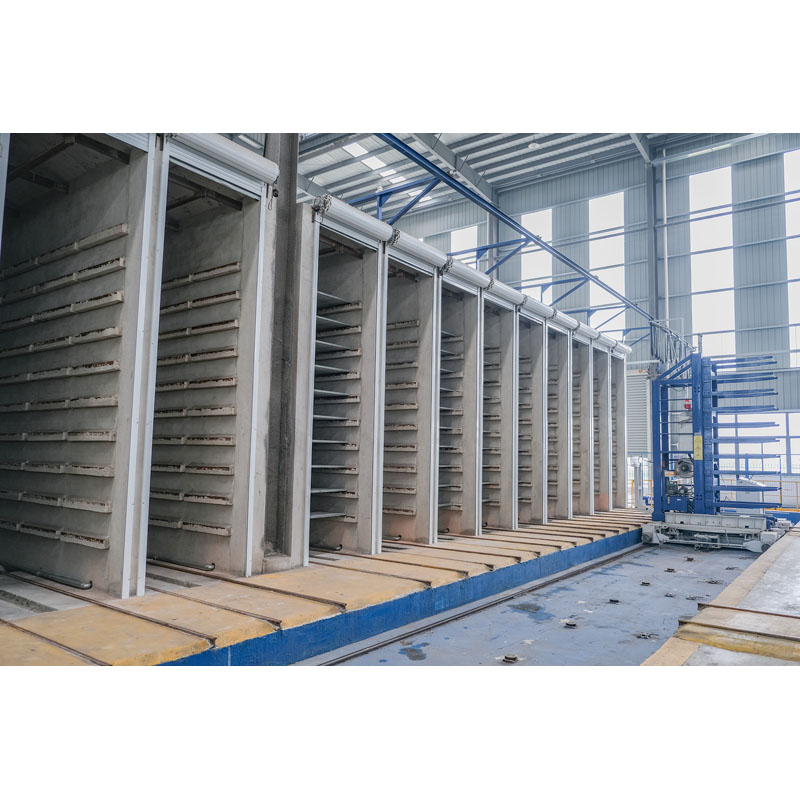
Table of Contents
- What Defines an Energy-Efficient Auxiliary Machinery Component?
- What Are the Core Categories of Energy-Efficient Auxiliary Machinery?
- What Technical Parameters Should You Evaluate Before Purchasing?
- Why Does Component Selection Directly Impact Your Energy Bill?
- How Do Quangong Machinery Components Perform in Real Production Environments?
- What Are the Industry Standards Governing Energy Efficiency in Auxiliary Systems?
- Summary
- FAQ
What Defines an Energy-Efficient Auxiliary Machinery Component?
Energy efficiency in auxiliary machinery is not simply about low power ratings on a specification sheet. A truly efficient component delivers the required output using the minimum possible input energy, maintains that efficiency across its full operating range, and sustains performance over a long service life without significant degradation. These three principles, output adequacy, operational range efficiency, and long-term stability, form the foundation of what our factory considers when engineering every product in our Auxiliary Machinery lineup.
The definition becomes more precise when you look at specific engineering metrics. For motors and drives, efficiency is measured as the ratio of mechanical output power to electrical input power, expressed as a percentage. Class IE3 and IE4 motors, for example, are internationally recognized as premium and super-premium efficiency classifications. For hydraulic and pneumatic components, efficiency involves minimizing pressure drop, reducing heat generation, and optimizing flow characteristics. For cooling and thermal management assemblies, the coefficient of performance (COP) is the primary metric. Each product category carries its own benchmarks, and meeting or exceeding those benchmarks is what separates genuinely efficient equipment from products that simply carry efficient labeling.
At Zenith, our quality control process includes energy performance validation at multiple stages of production. Every unit that leaves our factory undergoes load testing under simulated operating conditions. We verify that each component not only meets its rated efficiency at nominal load but also performs efficiently at partial loads, which represent the majority of real-world operating hours in most production facilities. This full-spectrum efficiency approach ensures that our customers see actual energy savings in operation, not just in the datasheet.
Key characteristics of a high-efficiency auxiliary component include:
- Low no-load losses, meaning the component consumes minimal power when running idle or at reduced capacity
- High power factor, particularly in electrical components, to reduce reactive power demand and associated utility penalties
- Minimal heat generation, which reduces the secondary energy load placed on cooling systems
- Variable speed or variable output capability, allowing the system to match energy consumption to actual demand in real time
- Sealed or enclosed designs that prevent contamination-related efficiency losses over time
- Advanced materials with low friction coefficients in mechanical transmission components
- Intelligent control integration that enables automated energy optimization without manual intervention
Understanding these characteristics empowers procurement managers and plant engineers to make purchasing decisions based on total cost of ownership rather than initial unit price. Over a five to ten year operational horizon, a component with 3% higher efficiency will deliver tens of thousands of dollars in energy savings depending on operational hours and local electricity costs. Our engineering documentation, available upon request, provides full lifecycle cost models for all major product categories in our Auxiliary Machinery range.
What Are the Core Categories of Energy-Efficient Auxiliary Machinery?
Auxiliary Machinery spans a wide range of subsystems within any manufacturing or processing facility. Rather than treating these as isolated components, our engineering philosophy at Quangong Machinery Co., Ltd. treats them as an interconnected system where efficiency improvements in one area compound the benefits in others. The following categories represent the primary areas where energy optimization delivers the greatest return on investment.
Servo Motor and Drive Systems
Servo motor and drive systems are among the highest-impact areas for energy reduction in modern production lines. Unlike conventional induction motors that run at fixed speeds, servo systems dynamically match motor output to instantaneous load requirements. This variable output capability eliminates the wasted energy that fixed-speed systems generate when running at full power against a reduced load. Our servo motor lineup achieves IE4 Super Premium Efficiency ratings across our standard product range.
Variable Frequency Drive Controllers
Variable frequency drives (VFDs) transform how motors consume energy by enabling soft-start operation, speed modulation, and regenerative braking. In pump and fan applications, reducing motor speed by just 20% can cut energy consumption by up to 50%, following the cube law relationship between speed and power. Our factory produces integrated VFD packages specifically configured for auxiliary machinery applications, with EMC filtering and harmonic mitigation built in.
Precision Cooling and Thermal Management
Cooling systems often represent 20 to 30 percent of total facility energy consumption. Our thermal management assemblies use variable-speed compressors, electronically commutated fan motors, and intelligent thermostat control to deliver only the cooling capacity that conditions demand. This demand-responsive approach eliminates the energy waste of conventional on-off cooling cycles.
Hydraulic Power Units with Load-Sensing Control
Traditional fixed-displacement hydraulic power units generate pressure and flow regardless of system demand, burning excess energy as heat through relief valves. Our load-sensing hydraulic units adjust pump output to match actual system requirements continuously. This single design change typically reduces hydraulic system energy consumption by 30 to 60 percent compared to conventional fixed-displacement configurations.
Pneumatic Efficiency Components
Pneumatic systems are notorious for compressed air leakage and inefficient pressure management. Our pneumatic Auxiliary Machinery components include precision pressure regulators, leak-resistant quick-connect fittings, and flow-optimized manifolds that collectively reduce compressed air consumption significantly. Compressed air is one of the most expensive energy utilities in manufacturing, often costing three to four times more per unit of work compared to direct electric drive systems.
What Technical Parameters Should You Evaluate Before Purchasing?
Technical parameter evaluation is where informed buyers separate high-performance components from products that only appear competitive on the surface. Our team at Quangong Machinery Co., Ltd. recommends a structured evaluation process covering the following parameters for each major component category.
Servo Motor Parameters
| Parameter | Standard Range | Our Specification | Relevance |
| Rated Power | 0.1 kW to 55 kW | 0.2 kW to 75 kW | Wider range covers more applications |
| Efficiency Class | IE2 to IE3 | IE3 to IE4 | Higher class reduces operating cost |
| Speed Range | 0 to 3000 RPM | 0 to 6000 RPM | Greater flexibility in speed matching |
| Torque Ripple | Below 5% | Below 2% | Smoother operation, less vibration loss |
| Encoder Resolution | 2500 PPR | Up to 23-bit absolute | Higher resolution improves positioning |
| Protection Class | IP54 | IP65 / IP67 optional | Suitable for harsh environments |
Variable Frequency Drive Parameters
| Parameter | Standard Range | Our Specification | Relevance |
| Input Voltage | 200V to 480V | 200V to 690V | Compatible with global power systems |
| Output Frequency Range | 0 to 400 Hz | 0 to 600 Hz | Supports high-speed spindle applications |
| Overload Capacity | 150% for 60s | 180% for 60s | Better handling of startup surges |
| Power Factor | 0.95 | Greater than 0.98 | Reduces reactive power penalties |
| Harmonic Distortion (THDi) | Below 10% | Below 5% with built-in filter | Protects power quality |
| Energy Recovery | Not standard | Optional regenerative braking | Returns braking energy to grid |
Hydraulic Power Unit Parameters
| Parameter | Standard Range | Our Specification | Relevance |
| System Pressure | Up to 200 bar | Up to 315 bar | Supports high-force applications |
| Flow Rate | Up to 100 L/min | Up to 200 L/min | Greater throughput capacity |
| Pump Type | Fixed displacement | Variable displacement, load-sensing | 30-60% energy saving vs fixed |
| Noise Level | Below 75 dB | Below 68 dB | Improved work environment |
| Oil Temperature Control | Manual | Automatic with PLC integration | Prevents viscosity-related losses |
Why Does Component Selection Directly Impact Your Energy Bill?
The relationship between component selection and energy expenditure is direct, measurable, and often significantly underestimated during procurement. Many purchasing decisions focus exclusively on capital cost, creating situations where a cheaper component generates far higher lifetime operating costs than a premium alternative. This section provides a factual breakdown of how component selection translates into real financial outcomes.
Consider a production facility running a standard 11 kW induction motor at IE2 efficiency class for 6,000 operating hours per year. At an average industrial electricity rate, this motor consumes approximately 68,640 kWh annually. Replacing this with an IE4 rated unit of the same output rating reduces consumption by approximately 3 to 4 percent, saving roughly 2,000 to 2,700 kWh per year. Across a facility with 50 motors of similar size, the annual saving approaches 135,000 kWh, with corresponding carbon emission reductions that increasingly carry regulatory and reputational value.
The impact of variable frequency drives on pump and fan applications is even more dramatic. Many facilities run pumps at fixed speed against a throttling valve to control flow, which wastes energy through artificial restriction. Installing a VFD and removing the throttle valve allows the pump to run at the exact speed required for the desired flow. Using the affinity laws that govern centrifugal machines, reducing pump speed by 25 percent cuts power consumption by approximately 42 percent. Our factory VFD products are configured specifically for these applications and include energy monitoring features that track savings in real time.
Factors that amplify the financial impact of component selection include:
- Operating hours per year, with three-shift continuous operations gaining proportionally more from efficiency improvements
- Local electricity tariffs, particularly facilities subject to demand charges based on peak consumption
- Age of existing equipment, where older components operating below original specifications compound inefficiency
- Heat generation in enclosed spaces, where inefficient components increase HVAC load and create a cascading energy penalty
- Maintenance costs driven by component stress, where high-efficiency designs with lower operating temperatures extend service intervals
- Carbon pricing and regulatory compliance costs in markets with active emissions trading schemes
Quangong Machinery Co., Ltd. provides full lifecycle energy cost analysis for major component upgrades upon request. Our engineering team calculates simple payback periods, internal rates of return, and net present value projections for customers evaluating capital investment in our Auxiliary Machinery product range. In the majority of cases reviewed by our team, premium efficiency components achieve payback within 18 to 36 months through energy savings alone, before accounting for reduced maintenance and extended service life.
How Do Quangong Machinery Components Perform in Real Production Environments?
Laboratory efficiency ratings provide a baseline, but real production environments introduce variables that challenge every component differently. Temperature fluctuations, duty cycle variations, voltage instability, contamination, and mechanical vibration all affect how components perform over time. Our factory testing and field validation programs are designed to ensure that our Auxiliary Machinery products maintain their rated performance under the full range of conditions our customers encounter.
Our standard testing protocol for servo motor and drive systems includes:
- Continuous rated load testing at ambient temperatures from minus 10 degrees Celsius to plus 50 degrees Celsius
- Vibration endurance testing at IEC 60068-2-6 levels to simulate transportation and installation shock
- Partial load efficiency mapping from 25 percent to 125 percent of rated load
- Long-duration thermal stability testing over 1,000 hours of continuous operation
- EMC compliance testing to CISPR 11 and IEC 61000 standards
- IP rating validation through dust and water ingress testing
For hydraulic power units, our validation process includes pressure cycling tests at 130 percent of maximum rated pressure, temperature-accelerated aging of seals and hoses, and contamination ingress simulation using ISO 4406 particle count methodology. These tests ensure that our products deliver consistent performance throughout their intended service life rather than degrading rapidly after installation.
Our customers across the plastics processing, metal fabrication, food production, and packaging industries consistently report that our components maintain efficiency ratings within 1 to 2 percent of original specification after three or more years of continuous operation. This long-term stability is a direct result of our material selection standards, precision manufacturing tolerances, and comprehensive quality validation at our factory.
Real-world performance highlights from our installed base include:
- A plastic injection molding facility achieved 34 percent reduction in hydraulic system energy consumption after replacing conventional fixed-displacement units with our load-sensing hydraulic power units
- A packaging line operator reduced annual motor energy costs by 28 percent after retrofitting 40 conveyor drives with our IE4 servo systems and integrated VFDs
- A metal stamping plant reduced compressed air consumption by 22 percent after installing our precision pneumatic manifold and regulation assemblies
- A food processing facility extended motor maintenance intervals from six months to over two years by switching to our sealed IE4 units with integrated condition monitoring
What Are the Industry Standards Governing Energy Efficiency in Auxiliary Systems?
Understanding the regulatory and standards landscape helps procurement and engineering teams specify components that meet current requirements and remain compliant as standards evolve. The Auxiliary Machinery sector is subject to a growing framework of international and regional efficiency standards that define minimum performance levels and testing methodologies.
The primary standards framework includes:
- IEC 60034-30-1, which defines the IE efficiency classification system for low-voltage AC motors from IE1 through IE4, with IE4 representing super premium efficiency
- IEC 61800-9-2, which extends efficiency standards to complete drive systems including the motor, drive controller, and mechanical transmission as an integrated unit
- EU Regulation 2019/1781, which mandates minimum IE3 efficiency for motors sold in European markets above specific power thresholds, with IE4 requirements phased in for higher power ranges
- NEMA Premium standard MG-1, applicable to North American markets and broadly equivalent to IE3 classification
- ISO 4406, governing hydraulic fluid cleanliness levels that directly affect hydraulic system efficiency and component longevity
- ISO 1217, which defines the testing methodology for compressor and compressed air system efficiency measurement
All products manufactured by Quangong Machinery Co., Ltd. are designed and tested to meet or exceed the applicable international standards for their product category. Our factory maintains ISO 9001:2015 quality management certification, and our electrical products carry CE marking for European market compliance. For customers in regulated industries including food processing, pharmaceuticals, and medical device manufacturing, we provide full documentation packages including material certifications, test reports, and conformity declarations.
The standards landscape continues to evolve toward higher minimum efficiency thresholds. Facilities that invest in components meeting current premium efficiency classifications protect themselves against future compliance costs, as products installed today will continue to meet regulatory requirements through the majority of their useful service life. This forward compatibility is a key consideration in our product development roadmap at Quangong Machinery Co., Ltd., where our engineering teams actively monitor emerging standards and incorporate compliance planning into every new product generation.
Summary
Energy efficiency in auxiliary machinery is a multidimensional challenge that requires informed component selection, precise technical specification, and a long-term perspective on operational costs. The most energy-efficient auxiliary machinery components share common characteristics: they operate efficiently across their full load range, they maintain performance over extended service periods, and they integrate effectively with modern control and monitoring systems.
The core product categories that deliver the greatest energy savings include high-efficiency servo motor systems rated to IE3 and IE4 standards, variable frequency drives optimized for partial load efficiency, load-sensing hydraulic power units, demand-responsive thermal management systems, and precision-engineered pneumatic assemblies. Each of these categories offers measurable financial returns through reduced energy consumption, lower maintenance requirements, and extended service life.
Quangong Machinery Co., Ltd. has built our product development, manufacturing, and quality validation processes around the goal of delivering genuine, measurable efficiency in real operating conditions. Our customers benefit from comprehensive technical support, lifecycle cost analysis, and a product range designed to meet current and future efficiency standards in global markets.
For procurement teams and plant engineers evaluating Auxiliary Machinery upgrades, the key takeaway is straightforward. The total cost of ownership analysis almost invariably supports investment in premium efficiency components, and the payback periods are significantly shorter than many initial estimates suggest. Energy savings accumulate daily, maintenance intervals extend, and compliance costs reduce over time.
If you are ready to evaluate specific products for your facility, our engineering team at Quangong Machinery Co., Ltd. is available to provide detailed specifications, custom configuration recommendations, and lifecycle cost projections. Contact us today to arrange a technical consultation and receive a customized product proposal for your application. Our factory team responds to all inquiries within one business day, and we offer sample testing programs for qualified evaluation projects.
FAQ
Q1: What is the difference between IE2, IE3, and IE4 efficiency classes in auxiliary machinery motors, and which should I specify for a new production line?
IE2, IE3, and IE4 are international efficiency classifications defined under IEC 60034-30-1, with each successive class representing a meaningful improvement in motor efficiency at rated load and across partial load conditions. IE2 is classified as high efficiency and represents the minimum acceptable standard in many markets. IE3 is classified as premium efficiency and is mandatory for most motor sizes sold in the European Union and increasingly required in North American markets. IE4 is classified as super premium efficiency and represents the current state of the art in commercially available induction and permanent magnet motor technology. For a new production line designed to operate continuously or on multi-shift schedules, specifying IE4 motors is strongly recommended. The additional capital cost compared to IE3 is typically recovered within 12 to 24 months through energy savings in high-utilization applications, and the lower operating temperature of IE4 motors also reduces thermal stress on windings and bearings, extending service life and reducing maintenance frequency. For low-utilization applications running fewer than 2,000 hours per year, IE3 may represent the optimum balance between capital cost and lifetime energy savings.
Q2: How do variable frequency drives reduce energy consumption in auxiliary machinery pump and fan applications, and what savings can I realistically expect?
Variable frequency drives reduce energy consumption in pump and fan applications by enabling the motor to run at exactly the speed required to deliver the needed flow or pressure at any given moment, rather than running at full speed and throttling output mechanically. This approach exploits the affinity laws governing centrifugal machines, which state that power consumption varies with the cube of rotational speed. In practical terms, reducing a pump motor from full speed to 80 percent of full speed reduces power consumption to approximately 51 percent of the full-speed value. Reducing speed to 70 percent of full speed drops power consumption to approximately 34 percent of the full-speed value. Realistic energy savings in industrial pump and fan applications typically range from 20 to 60 percent depending on the load profile and the degree of speed variation involved. Applications with highly variable flow demands, such as HVAC systems, cooling water loops, and compressed air stations, tend to achieve savings at the higher end of this range. Applications with relatively constant loads achieve more modest but still meaningful savings primarily through elimination of throttling losses and soft-start efficiency improvements.
Q3: What maintenance practices are required to sustain the energy efficiency of auxiliary machinery components over their full service life?
Sustaining energy efficiency over a component's service life requires a structured maintenance program that addresses the specific degradation mechanisms relevant to each component type. For electric motors, the primary efficiency degradation mechanisms are bearing wear, winding insulation degradation, and contamination of cooling passages. Bearing lubrication at manufacturer-specified intervals, periodic winding insulation resistance testing, and regular cleaning of air inlet screens and cooling fins preserve efficiency and prevent premature failure. For hydraulic power units, oil quality management is the most critical maintenance factor. Oil viscosity increases with thermal degradation and contamination, directly increasing pump drive losses. Implementing an oil analysis program and adhering to fluid change intervals recommended by both the equipment manufacturer and oil supplier sustains hydraulic efficiency within a few percentage points of new-unit specification throughout the service life. For variable frequency drives, periodic cleaning of internal heat sink fins, inspection of capacitor bank health, and firmware updates that maintain optimal control algorithm performance are the primary maintenance requirements. All components from our factory ship with detailed maintenance schedule documentation covering inspection intervals, lubrication specifications, wear part replacement criteria, and performance verification test procedures.
Q4: How do I calculate the return on investment for upgrading to higher-efficiency auxiliary machinery components in an existing facility?
Calculating the return on investment for an efficiency upgrade follows a structured process that begins with establishing the baseline energy consumption of the components to be replaced. This baseline is ideally established through direct power measurement using a calibrated power analyzer over a representative operating period of at least two weeks. If direct measurement is not practical, nameplate data combined with estimated operating hours and load factors can provide a reasonable approximation. Once the baseline is established, the expected energy consumption of the replacement components is calculated using the manufacturer's efficiency curves for the anticipated load profile. The annual energy saving is then the difference between baseline and projected consumption, multiplied by the applicable electricity tariff including any demand charge components. The simple payback period is the capital cost of the upgrade divided by the annual energy saving. A more rigorous analysis includes the net present value of energy savings over the expected service life, maintenance cost differences between old and new components, and any residual value of existing equipment. For facilities subject to carbon pricing or energy efficiency regulations, compliance cost avoidance adds further value to the investment case. Our engineering team at Quangong Machinery Co., Ltd. provides complimentary investment analysis for customers evaluating upgrades to our Auxiliary Machinery product range, using measured or estimated operational data provided by the customer.
Q5: What certifications and compliance documentation should I require from an auxiliary machinery supplier to ensure regulatory compliance in my market?
The documentation requirements for auxiliary machinery compliance vary by product category and destination market, but a comprehensive compliance package should include several core elements for any significant purchase. For electrical components including motors, drives, and control systems, CE marking with a Declaration of Conformity referencing the applicable directives and harmonized standards is required for European market deployment. This typically covers the Low Voltage Directive, the Electromagnetic Compatibility Directive, and where applicable the Machinery Directive. For North American markets, UL or CSA certification for electrical safety is the standard requirement, with many customers also specifying compliance with NEMA standards for dimensional and performance characteristics. For energy efficiency compliance specifically, independent test reports from accredited laboratories confirming IE classification for motors and drive system efficiency for VFD packages provide the documentation necessary for regulatory submissions and internal energy management reporting. For hydraulic and pneumatic components, material certifications, pressure equipment compliance documentation under PED 2014/68/EU for European applications, and fluid compatibility statements are standard requirements. ISO 9001 certification of the manufacturing facility provides assurance of quality management system rigor. Our factory maintains all relevant certifications and provides complete documentation packages with every shipment, including test reports, material certifications, and conformity declarations tailored to the destination market requirements of each order.
Send Inquiry



X
We use cookies to offer you a better browsing experience, analyze site traffic and personalize content. By using this site, you agree to our use of cookies.
Privacy Policy