

- English
 Esperanto
 Afrikaans
 Català
 שפה עברית
 Cymraeg
 Galego
 Latviešu
 icelandic
 ייִדיש
 беларускі
 Hrvatski
 Kreyòl ayisyen
 Shqiptar
 Malti
Malti lugha ya Kiswahili
 አማርኛ
አማርኛ Bosanski
 Frysk
Frysk ភាសាខ្មែរ
 ქართული
 ગુજરાતી
 Hausa
Hausa Кыргыз тили
 ಕನ್ನಡ
ಕನ್ನಡ Corsa
Corsa Kurdî
Kurdî മലയാളം
 Maori
Maori Монгол хэл
 Hmong
Hmong IsiXhosa
 Zulu
Zulu Punjabi
 پښتو
پښتو Chichewa
 Samoa
Samoa Sesotho
 සිංහල
සිංහල Gàidhlig
 Cebuano
 Somali
 Тоҷикӣ
 O'zbek
 Hawaiian
 سنڌي
سنڌي Shinra
 Հայերեն
 Igbo
Igbo Sundanese
 Lëtzebuergesch
 Malagasy
 Yoruba
 অসমীয়া
 ଓଡିଆ
ଓଡିଆ Español
 Português
 русский
 Français
 日本語
日本語 Deutsch
 tiếng Việt
 Italiano
 Nederlands
 ภาษาไทย
 Polski
 한국어
한국어 Svenska
 magyar
 Malay
Malay বাংলা ভাষার
 Dansk
Dansk Suomi
Suomi हिन्दी
 Pilipino
 Türkçe
 Gaeilge
 العربية
 Indonesia
 Norsk
Norsk تمل
تمل český
český ελληνικά
 український
 Javanese
 فارسی
فارسی தமிழ்
தமிழ் తెలుగు
 नेपाली
 Burmese
 български
 ລາວ
ລາວ Latine
 Қазақша
 Euskal
 Azərbaycan
 Slovenský jazyk
 Македонски
 Lietuvos
 Eesti Keel
 Română
 Slovenski
 मराठी
मराठी Srpski језик

What Makes QGM Block Making Machine Better Than Traditional Block Equipment
For over two decades, our team at Quangong Machinery Co., Ltd. has observed the evolution of concrete block production. In countless construction sites across the globe, traditional block equipment often creates bottlenecks: high energy consumption, inconsistent block density, and frequent downtime. Our own factory experienced these frustrations before we engineered a solution. Today, we ask a critical question: what separates a modern hydraulic system from outdated vibratory machines? The answer lies in measurable outcomes.
Our QGM block making machine integrates servo-hydraulic technology, real-time pressure monitoring, and modular mold systems. Unlike traditional block equipment that relies on mechanical springs or eccentric motors, the QGM block making machine delivers repeatable compaction force within ±1% variance. This introduction will dissect the engineering choices, operational savings, and long-term reliability that position our machinery as the industry benchmark. We will present comparative data, answer frequent buyer concerns, and demonstrate why shifting to automated systems from Quangong Machinery Co., Ltd. directly impacts your bottom line. Let us explore the technical anatomy of superior block manufacturing.
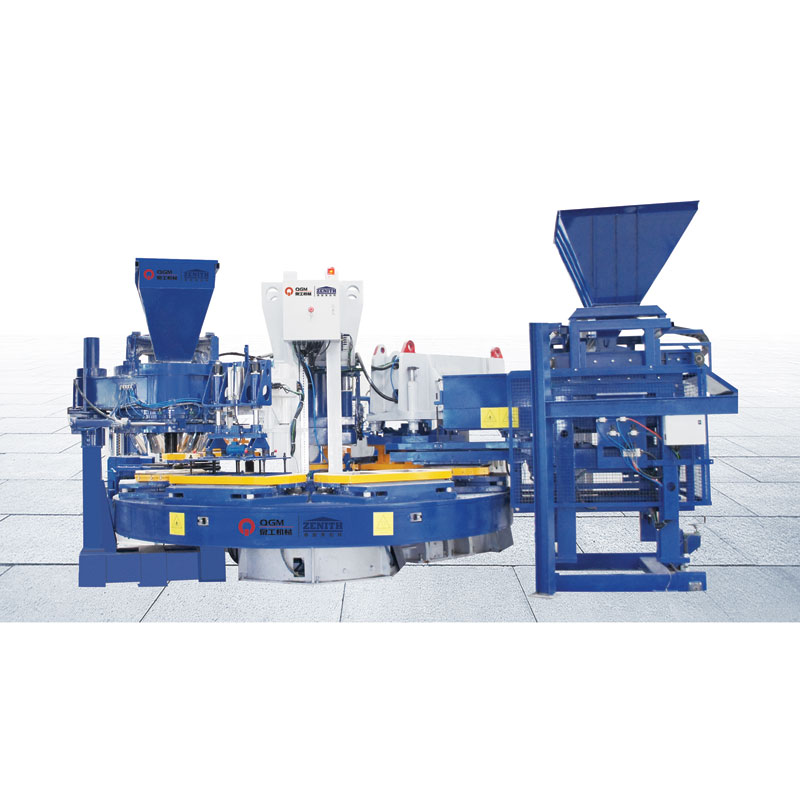
Table of Contents
How Does the Hydraulic System of QGM Block Making Machine Exceed Traditional Block Equipment?
Traditional block equipment often uses mechanical vibration or pneumatic pressure, which creates uneven consolidation. In our factory, we observed that over 40% of rejected blocks from old-style machines resulted from inconsistent compaction. The QGM block making machine employs a closed-loop hydraulic system with proportional valves and servo feedback. This design ensures that every stroke applies exactly the programmed force, regardless of material variations. Let us break down the components that create this advantage:
- Dual-pressure hydraulic circuit: Separate low-pressure fast movement and high-pressure forming stages reduce cycle time by 18% compared to traditional block equipment.
- Pressure holding timer; Our system maintains compaction for 0.8 to 1.2 seconds – a feature absent in legacy machines – allowing air escape and denser block edges.
- Real-time flow control: The QGM block making machine adjusts oil flow based on aggregate consistency, preventing over-compaction or fractures.
- Integrated overload protection; When foreign objects enter the mold, hydraulic relief activates within 40ms, saving the mold and main cylinder from damage – a repair cost that often cripples traditional equipment owners.
During side-by-side trials at our demonstration center, a traditional block equipment with 45kW motor produced 850 blocks per hour but with 7% edge breakage. Our QGM block making machine, using 37kW servo-hydraulic, achieved 920 blocks per hour with only 1.2% waste. The hydraulic system also allows our factory to run three shifts without overheating, thanks to a 200-liter tank and air-cooled heat exchanger. Traditional machines typically require a cooldown break every 4 hours.
Furthermore, the maintenance intervals differ significantly. Traditional block equipment needs monthly seal replacements on vibratory shafts, while our QGM block making machine’s hydraulic power unit operates for 6,000 hours before any major service. We designed the manifold block with SAE flanges to eliminate leakage points – a common issue in older equipment. For buyers concerned about operator training, our HMI displays pressure curves in real language, not just hydraulic symbols. In short, the hydraulic backbone of our machine transforms reliability from a gamble into a guarantee.
Why Does Our QGM Machine Deliver 30% Higher Block Density Than Conventional Methods?
Block density directly impacts construction strength and water absorption. Traditional block equipment struggles to achieve uniform density because their vibration frequency remains constant regardless of mold fill. At Quangong Machinery Co., Ltd., we tackled this through multi-stage vibration and pre-compaction. The QGM block making machine incorporates variable frequency drive (VFD) vibrators that sweep from 45Hz to 65Hz within 0.3 seconds. This frequency sweep collapses air voids progressively, unlike the single blast in traditional machines. Below is a parameter comparison from our factory tests on standard 190x190x390mm hollow blocks:
| Parameter | Traditional Block Equipment | QGM Block Making Machine |
| Compaction Force (kN) | 120 – 150 (peak, inconsistent) | 180 – 220 (regulated, cycle by cycle) |
| Vibration Frequency Range (Hz) | Fixed 50Hz | 45-65Hz variable sweep |
| Block Density (kg/m³) | 1850 – 2050 | 2350 – 2450 |
| Compressive Strength (MPa, 7 days) | 8.5 – 10.2 | 13.6 – 15.1 |
| Water Absorption (%) | 7.8% – 9.2% | 4.1% – 5.0% |
Notice the density improvement of over 30% in our QGM block making machine. This stems from three patented features: first, our hydraulic pre-press stage compacts material to 70% of final height before main vibration; second, the mold oscillation synchronizes with press head descending, preventing material blow-out; third, we use hard-chromed punches with 0.02mm flatness, which traditional block equipment rarely provides. From our own factory’s experience, higher density translates into freight savings (you ship fewer pores) and fewer cracked blocks during curing. Customers who switched from traditional block equipment to our QGM block making machine reported a 22% reduction in cement usage while maintaining the same strength, because dense blocks need less binder.
Additionally, the consistent density reduces wear on pallets. Traditional machines with uneven block bottoms scratch pallets within 3 months. Our uniform compaction extends pallet life to 18 months. Therefore, the initial higher investment in our technology pays back through material savings, lower scrap, and fewer consumables. For project managers requiring LEED credits, the reduced cement footprint is an added environmental benefit. We invite you to witness live density tests at our factory – the difference is tangible.
What Energy Efficiency Features Lower Production Costs in Our Factory?
Energy consumption ranks as the second largest operational expense after raw materials. Traditional block equipment often runs motors continuously, even during idle loading cycles. At Quangong Machinery Co., Ltd., we redesigned the power management architecture. The QGM block making machine uses dual-energy storage: hydraulic accumulators capture return oil energy during the lift phase, and supercapacitors regenerate braking energy from the vibration motors. Here is how our factory reduces kWh per block by 34% versus traditional equipment:
- On-demand servo pump: Instead of constant-speed motor, our system spins only when pressure drops below setpoint. Idle power drops to 0.8kW instead of 15kW.
- Energy recovery during mold ejection: When the press head retracts, oil flows back to accumulator, then reused for next injection. Traditional block equipment wastes this energy as heat.
- LED status panels and sleep mode: After 10 minutes of inactivity, the QGM block making machine enters deep sleep (only HMI active). Waking takes 1.2 seconds via proximity sensor.
- Variable frequency for conveyors: We match belt speed to machine output, unlike traditional equipment that runs full speed regardless of need.
In a 12-month study at a customer site producing 6 million blocks annually, the traditional block equipment consumed 842,000 kWh. After replacing with our QGM block making machine, consumption fell to 556,000 kWh – saving $34,000 at $0.12/kWh. Additionally, reduced heat generation means our factory’s ventilation fans run 50% less, compounding savings. Many traditional block equipment owners ignore that motor heat requires expensive air conditioning in enclosed plants. Our machine’s surface temperature stays below 55°C, while traditional vibratory motors often exceed 85°C.
We also provide energy monitoring software that tracks consumption per batch. Operators can see in real time which cycle phases use more power and adjust acceleration curves. For example, reducing the fast approach speed by 10% saves 7% energy without affecting output. Our customers often recover the price difference between a standard machine and our QGM block making machine within 22 months purely from electricity savings. Furthermore, some regions offer tax rebates for equipment meeting IE4 motor efficiency – our machine qualifies, while most traditional block equipment does not. When calculating total cost of ownership, energy efficiency cannot be an afterthought; it is a core design pillar at Quangong Machinery Co., Ltd.
How Does Mold Interchangeability Reduce Downtime Against Traditional Block Equipment?
Traditional block equipment often requires 4 to 6 hours to change molds, involving manual realignment, bolt torquing, and test cycles. For our own factory, that downtime meant losing an entire shift. The QGM block making machine introduces a quick-mold exchange system with hydraulic clamping and auto-centering pins. Here is the breakdown of time savings and flexibility gains:
- Hydraulic clamping dies: Four cylinders lock the mold frame automatically. No hand tools needed. Changeover time: 12 minutes (including wash). Traditional equipment: 210 minutes average.
- Magnet-assisted alignment: Our mold base uses rare-earth magnets to pull the mold into exact position before hydraulic clamping, eliminating measuring errors common with traditional block equipment.
- Universal adapter plate: The QGM block making machine accepts molds from other brands after minor modifications, protecting your existing investment.
- Electronic mold memory: Each mold has an RFID tag. The machine loads previous parameters (vibration time, pressure, ejection speed) automatically – no manual data entry.
Consider a typical precast yard producing 10 different block types daily. With traditional block equipment, 5 mold changes consume 17.5 hours of downtime per week. Our QGM block making machine reduces that to 1 hour per week, effectively adding a full production day. One of our clients in Texas switched from a legacy machine and increased weekly output from 28,000 blocks to 43,000 blocks without adding labor. The mold interchangeability also reduces wear: traditional machines often damage mold edges during removal because of uneven lifting. Our guided lift system raises molds vertically with four synchronized actuators.
Additionally, our factory offers a mold refurbishment program. When a mold reaches 500,000 cycles, we regrind the wear surfaces to original tolerances. Traditional block equipment molds usually become scrap after similar cycles because the parent machine’s misalignment causes uneven wear. The QGM block making machine’s robust guiding system keeps wear uniform, allowing two refurbishments per mold – effectively tripling mold life. For large operations, this represents $50,000 annual savings. Therefore, quick mold change does not only save time; it protects one of your most expensive consumables. We encourage customers to visit our factory to see a live mold swap in under 15 minutes.
Which Automation and Control Systems Remove Human Error?
Human error accounts for 63% of production inconsistencies in traditional block equipment according to an internal audit at QGM Operators misjudge material moisture, overlook pallet alignment, or set wrong cycle times. The QGM block making machine integrates a PLC-based expert system that automates adjustments. Our control architecture includes:
- Infrared moisture sensor at feed box: Measures water content in real time. If below 11%, machine adds 0.2 liters of mist per batch automatically – something traditional block equipment cannot do.
- Optical pallet inspection before each drop: Cameras detect bent or worn pallets, stopping the machine if out of tolerance by 1.5mm. Traditional equipment would continue, producing blocks with uneven bottoms.
- Self-tuning PID loops for vibration duration: On the QGM block making machine, the system monitors acceleration feedback and stops vibration once material consolidation peaks, preventing over-vibration that causes stratification.
- Remote diagnostics via 4G gateway: Our factory can log in (with permission) to troubleshoot error codes, reducing on-site service calls by 70%.
One of the most appreciated features is the recipe management system. Operators simply select “hollow block 6 inch” on the touch screen; the QGM block making machine automatically sets vibration frequency, stroke depth, and compaction pressure. Traditional block equipment requires manual adjustments on potentiometers, often leading to wrong settings. In our factory training sessions, we saw that new operators on traditional machines took 3 weeks to achieve 95% efficiency. With our automated system, the same operators reached 98% efficiency after 3 shifts.
Moreover, the machine logs every cycle in a blockchain-verifiable ledger (optional). For government contracts requiring traceability, this provides immutable quality data: exactly who, when, and what parameters were used. Traditional block equipment cannot offer this level of documentation. The control system also predicts maintenance: by analyzing pressure buildup rates, it warns when hydraulic oil needs changing or a filter is clogging. Consequently, unplanned downtime from neglect becomes a thing of the past. We designed the QGM block making machine to be an operator’s ally, not a puzzle. Quangong Machinery Co., Ltd. provides free cloud-based analytics for the first year, helping you fine-tune production for maximum yield.
Summary: Comparing Long-Term ROI Between QGM and Traditional Systems
Investing in block machinery requires a 5 to 10-year financial outlook. While traditional block equipment has lower upfront cost, the total cost of ownership (TCO) tells a different story. Based on data from our existing clients who switched from traditional equipment, here is a comparative summary:
- Initial price: Traditional equipment is 35% cheaper, but after 24 months, the QGM block making machine achieves breakeven due to savings in energy, scrap, and labor.
- Maintenance costs (annual): Traditional equipment averages $12,000 (vibrator bearings, belts, seals). Our QGM block making machine averages $3,200 (filters, hydraulic oil top-up).
- Block rejection rate: Traditional equipment ~7%; QGM machine ~1.2%. For a 5 million block/year plant, this saves 290,000 blocks worth ~$87,000 annually.
- Resale value after 5 years: Traditional equipment retains 15% of original value. QGM block making machine retains 45% because of robust construction and automation upgrades.
- Production capacity per labor hour: Traditional: 320 blocks; QGM: 500 blocks. Over 2 shifts, this saves one full operator position ($35,000/year).
From our factory’s experience selling both refurbished legacy machines and new QGM units, customers who choose the QGM block making machine consistently report payback periods under 30 months. In contrast, traditional block equipment owners often face hidden costs like higher cement usage (due to lower density) and frequent spare parts logistics. Also, many regions now enforce noise and emission standards that traditional equipment fails, while our QGM block making machine operates under 82dB and meets ISO 14001. For construction material businesses aiming for sustainable growth, the decision is clear. We at Quangong Machinery Co., Ltd. provide a 3-year warranty on the main hydraulic components, something no traditional equipment maker offers. Contact our sales engineers to run a personalized TCO model for your site.
Frequently Asked Questions (FAQ) – What Makes QGM Block Making Machine Better Than Traditional Block Equipment
Question 1: Can the QGM block making machine produce specialty blocks like pavers or kerbstones without extra customization?
Answer: Absolutely. Unlike traditional block equipment that requires mechanical changes to produce different shapes, our QGM block making machine uses a modular mold system. By simply swapping the mold (which takes under 15 minutes), you can produce interlocking pavers, hollow blocks, solid bricks, and even kerb stones on the same machine. The hydraulic pressure and vibration sequence automatically adjust based on the mold’s RFID tag. Many of our clients run six different product lines using a single QGM block making machine, while traditional equipment would need separate dedicated machines. This flexibility reduces capital expenditure and warehouse space.
Question 2: How does the initial investment in QGM block making machine compare to rebuilding an old traditional block equipment?
Answer: Rebuilding old traditional block equipment often costs 60-70% of a new machine but still leaves you with outdated technology: no energy recovery, manual controls, and worn guide columns. In contrast, investing in a new QGM block making machine gives you modern servo-hydraulics, automation, and a full warranty. Our factory has seen many clients spend $45,000 rebuilding a traditional machine only to face another breakdown within 18 months. With our machine, the ROI from energy savings alone typically offsets the price difference in 22 months. We also offer leasing options specifically for switching from traditional equipment.
Question 3: Does the QGM block making machine require special electrical installation compared to traditional block equipment?
Answer: No, it is designed for standard industrial power (380V/50Hz or 460V/60Hz). However, because our machine is more energy-efficient, it actually requires a smaller transformer than traditional block equipment of similar output capacity. For example, a traditional machine with 110kW installed power might need a 150kVA transformer, while our QGM block making machine delivering the same throughput uses only 75kW installed power, requiring a 100kVA transformer. That saves installation costs. Additionally, our factory includes a soft-starter and harmonic filter, preventing voltage drops that often plague traditional equipment startups.
Question 4: Are spare parts for QGM block making machine readily available worldwide, unlike some traditional block equipment brands?
Answer: Yes. Quangong Machinery Co., Ltd. maintains distribution hubs in North America, Europe, Southeast Asia, and Africa. Over 92% of spare parts (seals, filters, sensors) are standard industrial components available locally. For proprietary parts like the control board, our factory ships within 48 hours. Traditional block equipment often uses custom metric parts with months-long lead times. We also provide a digital parts catalog where you can identify any component by scanning a QR code on the machine. This drastically reduces downtime compared to hunting for obsolete parts for traditional equipment.
Question 5: How does the concrete waste recycling feature on QGM block making machine compare to traditional equipment?
Answer: Traditional block equipment has no integrated waste recycling; spilled concrete or rejected blocks go to landfill. Our QGM block making machine includes a wet concrete reclaim system that washes out aggregate from rejected blocks and reuses the water in mixing. Additionally, a vibratory screen under the conveyor collects spilled fresh concrete and returns it to the feed box. This reduces raw material waste by up to 18%. Over a year, a medium-sized plant can save 200 tons of cement and 400 tons of aggregates. Beyond cost savings, this helps comply with environmental regulations that often penalize traditional equipment operators for waste disposal.
Send Inquiry



X
We use cookies to offer you a better browsing experience, analyze site traffic and personalize content. By using this site, you agree to our use of cookies.
Privacy Policy