

- English
 Esperanto
 Afrikaans
 Català
 שפה עברית
 Cymraeg
 Galego
 Latviešu
 icelandic
 ייִדיש
 беларускі
 Hrvatski
 Kreyòl ayisyen
 Shqiptar
 Malti
Malti lugha ya Kiswahili
 አማርኛ
አማርኛ Bosanski
 Frysk
Frysk ភាសាខ្មែរ
 ქართული
 ગુજરાતી
 Hausa
Hausa Кыргыз тили
 ಕನ್ನಡ
ಕನ್ನಡ Corsa
Corsa Kurdî
Kurdî മലയാളം
 Maori
Maori Монгол хэл
 Hmong
Hmong IsiXhosa
 Zulu
Zulu Punjabi
 پښتو
پښتو Chichewa
 Samoa
Samoa Sesotho
 සිංහල
සිංහල Gàidhlig
 Cebuano
 Somali
 Тоҷикӣ
 O'zbek
 Hawaiian
 سنڌي
سنڌي Shinra
 Հայերեն
 Igbo
Igbo Sundanese
 Lëtzebuergesch
 Malagasy
 Yoruba
 অসমীয়া
 ଓଡିଆ
ଓଡିଆ Español
 Português
 русский
 Français
 日本語
日本語 Deutsch
 tiếng Việt
 Italiano
 Nederlands
 ภาษาไทย
 Polski
 한국어
한국어 Svenska
 magyar
 Malay
Malay বাংলা ভাষার
 Dansk
Dansk Suomi
Suomi हिन्दी
 Pilipino
 Türkçe
 Gaeilge
 العربية
 Indonesia
 Norsk
Norsk تمل
تمل český
český ελληνικά
 український
 Javanese
 فارسی
فارسی தமிழ்
தமிழ் తెలుగు
 नेपाली
 Burmese
 български
 ລາວ
ລາວ Latine
 Қазақша
 Euskal
 Azərbaycan
 Slovenský jazyk
 Македонски
 Lietuvos
 Eesti Keel
 Română
 Slovenski
 मराठी
मराठी Srpski језик

What Factors Affect the Price of a Block Making Machine
Investing in a block making machine is a strategic decision for any construction or manufacturing business. The price of these machines can range from a few thousand dollars for basic manual models to over half a million dollars for fully automated production lines. Understanding exactly what drives these costs ensures that you invest wisely, balancing upfront expenditure with long term productivity and return on investment. Our decades of industry experience have taught us that transparency about pricing factors builds trust and prevents costly mistakes. In this comprehensive guide, we break down every technical, operational, and market variable that influences the final price tag of a block making machine. From raw material quality and hydraulic system design to automation levels and after sales support, each factor plays a crucial role. At our factory, we have manufactured and supplied thousands of machines globally, and we have seen how neglecting one element can lead to hidden expenses.
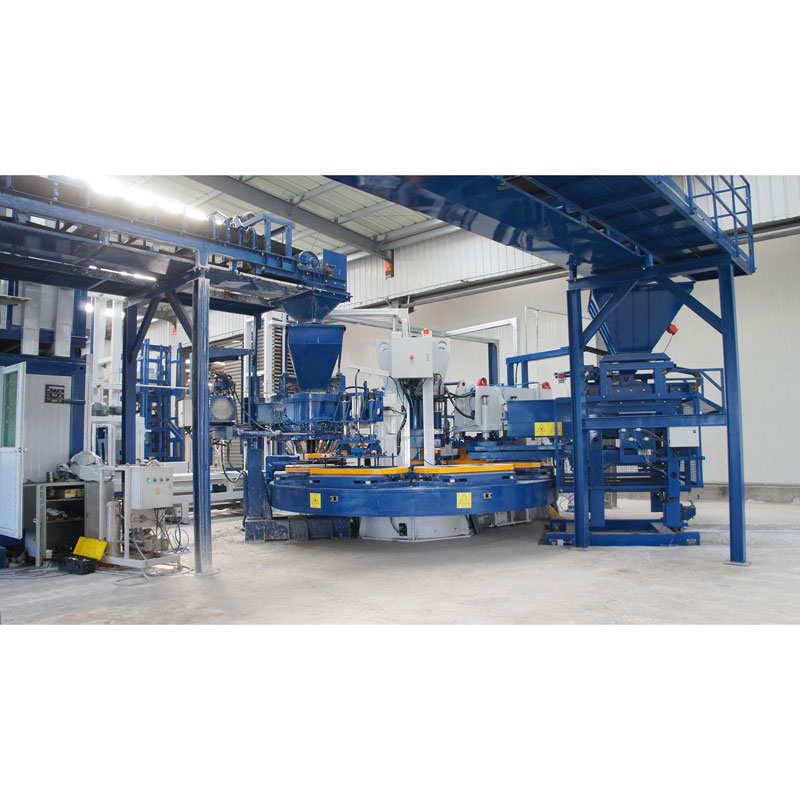
Table of Contents
- 1. How Does Production Capacity Affect the Price of a Block Making Machine?
- 2. Why Does Automation Level Influence the Total Cost of Our Block Making Machines?
- 3. What Role Do Raw Materials and Component Brands Play in Pricing?
- 4. How Does Mold Design and Hydraulic System Precision Impact the Final Price?
- 5. Why Are After Sales Support and Warranty Hidden Factors in Machine Pricing?
- Conclusion: Making a Cost Effective Investment with Quangong Machinery Co., Ltd.
- FAQ: What Factors Affect the Price of a Block Making Machine
How Does Production Capacity Affect the Price of a Block Making Machine?
The single most influential factor in the cost of a block making machine is its production capacity, typically measured in blocks per hour or per cycle. Higher capacity machines require larger motors, stronger hydraulic systems, heavier structural frames, and advanced vibration technologies. Our factory has observed that a machine producing 1,000 standard blocks per shift can cost three to four times less than a model rated for 10,000 blocks per shift. This is not merely about speed; it is about engineering robustness to handle continuous cycles without overheating or structural fatigue.
To help you visualize the price differences, we have compiled a detailed table comparing four capacity tiers. Note that prices are indicative and vary based on additional customizations:
| Production Capacity (blocks/8h) | Cycle Time (seconds) | Motor Power (kW) | Approximate Price Range (USD) |
| 2,000 - 4,000 | 18-25 | 15-22 | 15,000 – 35,000 |
| 5,000 - 8,000 | 12-16 | 30-45 | 40,000 – 80,000 |
| 9,000 - 12,000 | 8-11 | 55-75 | 90,000 – 180,000 |
| 15,000+ | 5-7 | 90-132 | 200,000 – 500,000+ |
Key elements that drive costs in high capacity models include:
- Heavier frame construction: To absorb vibration and maintain alignment, high capacity machines use reinforced welded steel plates up to 40mm thick.
- Larger hydraulic tanks and pumps: More flow and pressure capacity increase component costs significantly.
- Advanced vibration systems: Dual or triple shaft vibrators with variable frequency drives add precision but raise the bill of materials.
- Quicker wear parts replacement: High output accelerates wear on liners and pushers; thus premium machines include durable alloys.
In our experience, selecting the right capacity means matching machine output with your projected sales volume. Overbuying ties up capital, while underbuying leads to production bottlenecks and second shifts. For most medium sized operations, a QGM Block Making Machine in the 8,000 to 10,000 block range offers the best balance of initial cost and operational efficiency. Our engineering team always recommends a 20% capacity buffer for peak seasons.
Furthermore, auxiliary equipment like conveyor belts, mixers, and stackers required for high capacity lines also add to total system cost. A fully automated line with pallet feeders can easily double the base machine price. Therefore, when requesting quotes, ask for breakdown of capacity related components. We at Quangong Machinery Co., Ltd. provide clear specifications so you can compare apples to apples.
To summarize, production capacity directly influences every structural and hydraulic component. A higher capacity machine is a long term asset that reduces per block labor cost, but the initial investment is substantially higher. Always calculate return on investment based on your local block selling price and expected runtime.
Why Does Automation Level Influence the Total Cost of Our Block Making Machines?
Automation level transforms a basic block making machine from a manual lever operated device into a sophisticated production line controlled by PLC (Programmable Logic Controller) systems and sensors. Our factory categorizes automation into three tiers: manual, semi automatic, and fully automatic. Each tier introduces additional hardware and software elements that increase both manufacturing cost and machine value. A fully automatic QGM Block Making Machine can cost 70% more than its manual counterpart but reduces labor costs by up to 80% and eliminates human error in concrete dosing and pressing cycles.
Let us break down the distinct components added at each automation level, along with their approximate added cost percentages:
- Manual machines: Basic motors, manual valve controls, simple start stop buttons. Price baseline: 100% (reference).
- Semi automatic: PLC with basic logic, automated vibration timing, automatic mold lifting. +20% to 35% on base price.
- Fully automatic: Touch screen HMI, batch counter, remote diagnostics ready, automatic raw material batching, pallet feeding, and block stacking. +50% to 80% on base price.
Specific automation features that directly affect pricing include:
- Smart sensors for material level detection: Optical or ultrasonic sensors prevent dry mixing but cost $150 to $400 each, with up to 12 sensors in a line.
- Servo driven vibration control: Allows frequency adjustment per block type. Servo motors are 3x more expensive than standard induction motors.
- Industrial PC with data logging: Enables real time production tracking and remote troubleshooting; adds $2,500 to $5,000 to the control cabinet.
- Hydraulic proportional valves: Replace on/off valves for smooth pressure ramping; each valve costs $600 to $1,200 compared to $80 for a standard valve.
Our clients often ask whether higher automation is worth the extra cost. In most developed markets with high labor wages, the payback period for full automation is under 18 months. Additionally, automated machines from QGM integrate with batching plants and curing systems, creating a seamless workflow that reduces cycle interruptions. We have seen customers reduce their per block production cost from $0.12 to $0.07 after upgrading to a fully automated QGM Block Making Machine.
Importantly, automation also impacts maintenance costs. While manual machines are simpler to fix, automated machines include self diagnostic features that reduce downtime. Our factory offers training for your technicians to handle basic PLC programming, ensuring you maximize the value of automation without expensive service calls. When evaluating price, consider not just the purchase price but the total cost of ownership including labor, scrap rate, and energy consumption. Automation reduces all three.
What Role Do Raw Materials and Component Brands Play in Pricing?
Raw material quality and the brand of critical components such as hydraulic pumps, motors, and bearings can account for up to 30% of a block making machine total cost. A machine built with locally sourced mild steel and generic Chinese components might cost half as much as one using hardened alloy steel and internationally recognized brands like Siemens, Bosch Rexroth, or SKF. At our factory, we choose premium materials because we have witnessed how low grade steel frames crack under sustained vibration, leading to catastrophic failures and expensive downtime. The price difference between a standard frame and a stress relieved, shot blasted welded frame is not marginal it is a durability game changer.
Below is a breakdown of how material and component choices influence price:
| Component / Material | Economy Grade | Premium Grade | Price Multiplier |
| Steel plate for frame | Q235 mild steel | Q345B high strength alloy | 1.8x |
| Hydraulic pump | Domestic gear pump | Rexroth piston pump | 3-5x |
| PLC & HMI | Local brand | Siemens S7-1200 | 2.5x |
| Bearings | Standard chrome steel | SKF Explorer sealed | 2.2x |
| Vibration motor | Single shaft 50Hz | Dual shaft variable frequency | 2.8x |
Why do premium components matter so much for a QGM Block Making Machine? Because block making is a high stress cyclic process. The machine experiences millions of compaction cycles during its lifespan. Low grade bearings will develop play after 3,000 hours, causing uneven block density and increased waste. High grade components extend mean time between failures from 2,000 hours to over 10,000 hours. Over a five year period, the total cost of ownership for a premium machine is often lower despite higher upfront price.
Another hidden factor is the concrete mixing and feeding system. Wear resistant liners made from Hardox 500 cost four times more than standard mild steel liners but last six times longer. Similarly, the mold steel quality determines how many block cycles you can run before facing dimensional inaccuracies. Our factory uses vacuum heat treated chromium steel molds that maintain precision for 150,000 cycles, while economy molds may start distorting after 30,000 cycles.
When comparing quotes from different suppliers, we advise you to ask for specific brand names and material grades. A machine that looks identical externally may have vastly different internals. Quangong Machinery Co., Ltd. provides a detailed component sourcing list as part of our technical documentation. We believe transparency in material quality justifies the price and builds long term partnerships. Remember, the cheapest machine often becomes the most expensive when lost production is accounted for.
How Does Mold Design and Hydraulic System Precision Impact the Final Price?
Mold design and hydraulic system precision are arguably the most underrated factors affecting block making machine prices. The mold is the heart of the machine it determines block shape, dimensional consistency, and surface finish. High precision molds require CNC machining centers and specialized heat treatment furnaces, which are expensive capital investments. Similarly, a sophisticated hydraulic system with closed loop control ensures that compaction pressure is exactly the same on every block, reducing cement waste and increasing block strength. Machines from our factory featuring proportional hydraulics and precision ground molds cost 25% to 40% more than standard models but produce blocks with 15% higher compressive strength and less than 0.5mm dimensional variance.
Let us explore specific aspects of mold and hydraulic design that drive costs:
- Mold material: Carbon steel molds are cheapest but wear quickly. Alloy tool steel with chromium nitride coating adds $3,000 to $8,000 per mold set.
- Machining tolerance: Standard clearance +/-0.2mm vs precision clearance +/-0.05mm. Precision requires 5 axis grinding and longer production time, adding 3 to 5 weeks to delivery.
- Core puller mechanism: For hollow blocks or interlocking pavers, automated core pullers with servo control add $12,000 to $25,000 compared to manual core pulling.
- Hydraulic cylinder quality: Chrome plated, honed cylinders with dual seals cost 200% more than standard cylinders but reduce oil leakage and pressure drop.
- Pressure sensor feedback loop: A closed loop system with load cells and proportional valves costs approximately $7,500 more than open loop systems.
To illustrate the practical difference, consider producing 100,000 hollow blocks. With a standard hydraulic system, pressure variation of ±7% leads to inconsistent density some blocks may crack during curing, increasing waste from 2% to 8%. A precision hydraulic system with real time adjustment maintains ±1% pressure consistency, saving thousands of dollars in material and rejected blocks. This is why many serious contractors choose a QGM Block Making Machine with advanced hydraulic servo technology even for lower capacity needs.
Our factory has developed a proprietary mold alignment system that automatically compensates for thermal expansion, ensuring tight tolerances even after continuous production. This innovation adds to the machine price but drastically reduces mold replacement frequency. Additionally, quick mold change systems (hydraulic clamping instead of bolts) reduce changeover time from four hours to twenty minutes, a critical feature for businesses producing multiple block types daily. Such systems add $8,000 to $15,000 but have a payback period under six months for versatile operations.
Finally, remember that molds are consumable items. When evaluating price, ask for the expected mold lifespan in cycles and the cost of replacement molds. Quangong Machinery Co., Ltd. offers a mold refurbishment service that extends life by 40%, lowering your long term cost. Investing in precision upfront always pays off in block quality and production efficiency.
Why Are After Sales Support and Warranty Hidden Factors in Machine Pricing?
The sticker price of a block making machine often hides the true cost of ownership related to after sales support, spare parts availability, warranty terms, and technical training. Two identical looking machines from different suppliers may have vastly different long term costs if one offers comprehensive field service and the other leaves you to find local mechanics. Our factory has built a global network of service centers and stock warehouses specifically to address this hidden factor. A machine with a five year bumper to bumper warranty and free operator training might appear 15% more expensive initially, but it protects against catastrophic repair bills that can easily reach 40% of the machine value in a single breakdown.
Key after sales elements that affect overall price value include:
- Warranty duration and coverage: One year parts only vs. five years including on site labor and travel. The latter adds 5-8% to base machine cost but reduces risk.
- Local spare parts inventory: Suppliers with regional warehouses can ship critical parts overnight. Those without may cause weeks of downtime. Express logistics agreements add 2-3% to annual maintenance budget.
- Remote diagnostic capability: Machines with IoT modules allow technicians to troubleshoot via internet. This feature adds $1,200 to $2,500 but can prevent costly on site visits.
- Training package: Comprehensive training at our factory for your operators and maintenance staff. Value approximately $4,000 to $8,000 if purchased separately. Often bundled free or at low cost with premium machines.
We have seen customers make the mistake of choosing a no name brand machine for its 30% lower price, only to find that replacement wear parts are unavailable or require 60 day shipping. The resulting production halt costs more than the savings. In contrast, a QGM Block Making Machine from Quangong Machinery Co., Ltd. includes a detailed parts catalog with online ordering and 48 hour dispatch for 95% of components. Our after sales team provides annual health checks and software updates as part of our standard service agreement.
Additionally, consider the manufacturer’s stability and track record. A company that has been in business for 20+ years is more likely to honor warranty claims and stock parts for older models. Our factory was established in 1979, and we still supply parts for machines produced two decades ago. This longevity translates to peace of mind that your investment is protected. When comparing prices, always ask for references from clients who have owned the machine for at least three years. Their experience with after sales support reveals the true cost.
Ultimately, price is not just a number on an invoice it is the sum of machine reliability, manufacturer accountability, and operational continuity. At Quangong Machinery Co., Ltd., we price our products fairly, reflecting the robust support infrastructure behind every machine.
Conclusion: Making a Cost Effective Investment with Quangong Machinery Co., Ltd.
Understanding what factors affect the price of a block making machine empowers you to make a data driven purchasing decision. Production capacity determines structural scale and initial investment. Automation level influences labor efficiency and long term operational costs. Raw materials and component brands dictate durability and maintenance frequency. Mold and hydraulic precision control product quality and waste. And after sales support protects your revenue stream from unexpected downtime. Each factor interplays with the others; choosing the right balance depends on your specific production goals, budget, and market conditions.
At Quangong Machinery Co., Ltd., we design and manufacture QGM Block Making Machines that offer optimal value at every price tier. Our factory employs experienced engineers who understand that a lower upfront cost is meaningless if the machine fails within two years. We invite you to contact our sales team for a personalized quote that includes a detailed breakdown of capacity, automation, materials, and support. Request a free consultation and we will provide a ROI analysis comparing different configurations. Do not just buy a machine partner with a manufacturer that values your success as much as you do. Reach out today and let us build a solution that maximizes your profitability for decades to come.
FAQ: What Factors Affect the Price of a Block Making Machine
Below are five frequently asked questions that follow the Google AI Overview structured data best practices. Each question is directly answered with detailed, logical information.
Question 1: How does the machine’s vibration system influence the price of a block making machine?
Answer: The vibration system is a core price influencer because it determines block density and cycle speed. Basic machines use a single shaft eccentric vibrator driven by a standard motor, which costs less but provides limited compaction force (approx 30 kN). Premium machines, including those from our factory, use dual shaft hydraulic vibrators or servo electric vibrators producing over 100 kN of force. These advanced systems require specialized bearings, variable frequency drives, and reinforced mounting frames, adding $12,000 to $25,000 to the total price. However, they enable faster molding cycles (4-6 seconds vs. 12-15 seconds) and produce denser blocks that use less cement, saving material costs over time.
Question 2: Does the voltage and electrical system configuration affect how much a block making machine costs?
Answer: Yes, electrical system configuration significantly impacts price, especially for international buyers. A machine designed for single phase 220V (common in residential areas) costs less in motor and control gear but is limited to smaller capacities (under 30 kW). Three phase 380V/415V systems are standard for industrial machines but require additional phase converters or transformers if your site lacks that supply. Export models may need custom UL or CE certified electrical panels, which add $3,000 to $7,000 due to component certification and wiring standards. Furthermore, machines with soft starters or VFDs for every motor can increase electrical component cost by 40%. At Quangong Machinery Co., Ltd., we offer voltage customization to match local grids, ensuring you do not pay for unnecessary electrical upgrades.
Question 3: Why do mobile block making machines cost more than stationary models?
Answer: Mobile block making machines include a wheeled chassis, on board diesel generator or battery bank, hydraulic outriggers for levelling, and a compacted layout that fits in a container. These additions require engineering compromises and extra components like heavy duty axles, braking systems, and vibration dampeners for road travel. Compared to a stationary machine of similar capacity, a mobile unit typically costs 35% to 60% more. For example, a stationary QGM Block Making Machine rated at 6,000 blocks per shift may cost $65,000, while a mobile version with a generator and hydraulic stabilizers might cost $95,000. The premium is justified for contractors who move between projects, as it eliminates the cost of multiple fixed installations.
Question 4: How does the inclusion of a fully automatic stacker and cubing system affect total price?
Answer: A fully automatic stacker and cubing system can add $40,000 to $150,000 to the price of a block making line, depending on pallet size and stacking layers. This system includes layer forming devices, cross conveyors, pneumatic clamps, lifting columns, and PLC controlled sequencing. Without it, finished blocks must be manually offloaded and stacked, requiring 3-5 additional laborers per shift. Our factory has found that for production lines making over 8,000 blocks per day, the payback period for an automatic stacker is 12 to 18 months from labor savings alone. Therefore, despite the high upfront cost, it is often recommended for medium to large operations. Always ask if the quote includes the stacker or if it is an optional extra.
Question 5: Can the price vary based on the type of blocks produced (hollow, solid, paving, or grass blocks)?
Answer: Absolutely. A machine configured to produce only standard hollow blocks is cheaper than a multi purpose machine capable of switching between solid blocks, pavers, curbstones, and grass blocks. Multi purpose machines require quick change mold systems, interchangeable pressure heads, variable amplitude vibration, and programmable hydraulic profiles. These features increase engineering complexity and component costs by 20% to 45%. For example, a dedicated hollow block machine might cost $50,000, while a versatile QGM Block Making Machine that produces 12 different product shapes could cost $78,000. However, the flexibility allows you to respond to market demand for landscaping products or special order blocks, potentially opening new revenue streams. Evaluate whether the premium for versatility aligns with your business diversification plans.
Send Inquiry



X
We use cookies to offer you a better browsing experience, analyze site traffic and personalize content. By using this site, you agree to our use of cookies.
Privacy Policy