

- English
 Esperanto
 Afrikaans
 Català
 שפה עברית
 Cymraeg
 Galego
 Latviešu
 icelandic
 ייִדיש
 беларускі
 Hrvatski
 Kreyòl ayisyen
 Shqiptar
 Malti
Malti lugha ya Kiswahili
 አማርኛ
አማርኛ Bosanski
 Frysk
Frysk ភាសាខ្មែរ
 ქართული
 ગુજરાતી
 Hausa
Hausa Кыргыз тили
 ಕನ್ನಡ
ಕನ್ನಡ Corsa
Corsa Kurdî
Kurdî മലയാളം
 Maori
Maori Монгол хэл
 Hmong
Hmong IsiXhosa
 Zulu
Zulu Punjabi
 پښتو
پښتو Chichewa
 Samoa
Samoa Sesotho
 සිංහල
සිංහල Gàidhlig
 Cebuano
 Somali
 Тоҷикӣ
 O'zbek
 Hawaiian
 سنڌي
سنڌي Shinra
 Հայերեն
 Igbo
Igbo Sundanese
 Lëtzebuergesch
 Malagasy
 Yoruba
 অসমীয়া
 ଓଡିଆ
ଓଡିଆ Español
 Português
 русский
 Français
 日本語
日本語 Deutsch
 tiếng Việt
 Italiano
 Nederlands
 ภาษาไทย
 Polski
 한국어
한국어 Svenska
 magyar
 Malay
Malay বাংলা ভাষার
 Dansk
Dansk Suomi
Suomi हिन्दी
 Pilipino
 Türkçe
 Gaeilge
 العربية
 Indonesia
 Norsk
Norsk تمل
تمل český
český ελληνικά
 український
 Javanese
 فارسی
فارسی தமிழ்
தமிழ் తెలుగు
 नेपाली
 Burmese
 български
 ລາວ
ລາວ Latine
 Қазақша
 Euskal
 Azərbaycan
 Slovenský jazyk
 Македонски
 Lietuvos
 Eesti Keel
 Română
 Slovenski
 मराठी
मराठी Srpski језик

How Concrete Mixers Contribute to Sustainable Construction Practices?
As the construction industry faces mounting pressure to reduce its environmental footprint, attention has turned to every aspect of the building process—from material sourcing to waste management. Yet one piece of equipment, often overlooked in sustainability discussions, plays a surprisingly pivotal role: the Concrete Mixer. This workhorse of construction sites is not just a tool for combining materials; it is a critical enabler of sustainable practices. From reducing material waste to enabling the use of recycled aggregates, and from lowering energy consumption to facilitating green concrete technologies, the modern Concrete Mixer is a powerful ally in the quest for a more sustainable built environment.
Concrete is the most widely used man-made material on Earth, and its production accounts for approximately 8% of global CO₂ emissions. While much of this impact comes from cement manufacturing, the mixing process itself offers significant opportunities for improvement. Advanced Concrete Mixer designs are now capable of producing high-quality concrete with lower cement content, better aggregate utilization, and reduced mixing energy. These innovations are transforming the Concrete Mixer from a simple production tool into a strategic asset for sustainability. This article will explore the specific ways in which modern Concrete Mixers contribute to sustainable construction—covering energy efficiency, waste reduction, material optimization, and support for alternative binders and recycled materials. We will also share technical specifications and operational strategies that can help you maximize the sustainability performance of your Concrete Mixer.
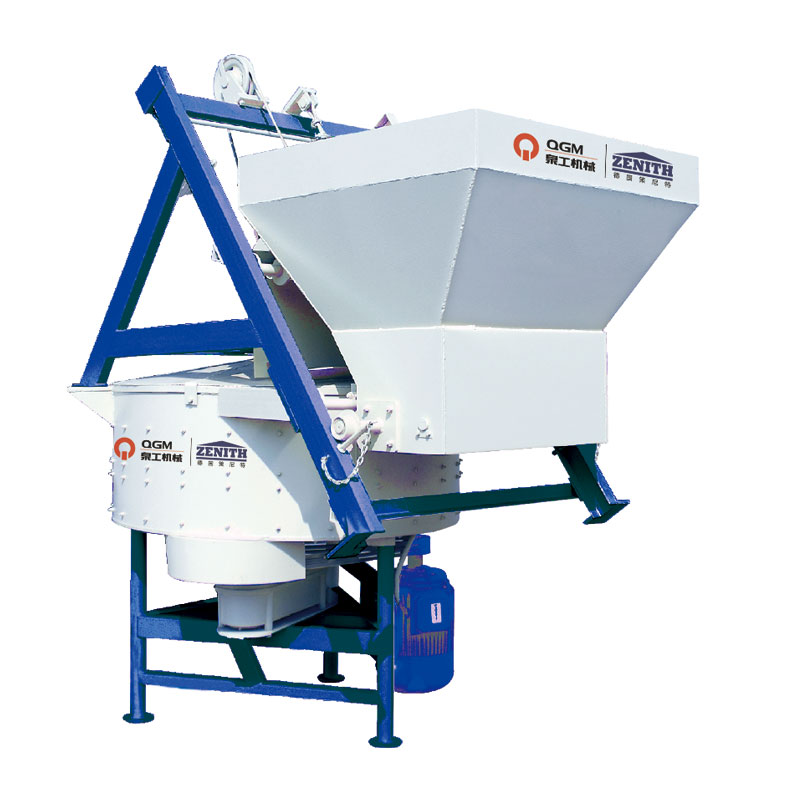
Table of Contents
- 1. What Are Concrete Mixers in the Context of Sustainable Construction?
- 2. How Do Energy-Efficient Mixer Designs Lower Carbon Footprint?
- 3. How Does Precision Mixing Reduce Material Waste?
- 4. What Role Do Concrete Mixers Play in Enabling Green Concrete Technologies?
- 5. How Can Operational Practices Maximize Sustainability?
- Frequently Asked Questions (FAQ)
- Conclusion
1. What Are Concrete Mixers in the Context of Sustainable Construction?
A Concrete Mixer is a machine that combines cement, aggregates (sand and gravel), water, and admixtures to produce concrete. At its simplest, it is a rotating drum with internal blades that tumble the ingredients together. However, in the context of sustainable construction, the Concrete Mixer is far more than a simple mixer. It is the key to producing consistent, high-quality concrete that enables designers to optimize material usage, reduce structural mass, and achieve longer service life—all of which contribute to a lower environmental footprint. The sustainability potential of a Concrete Mixer extends beyond its core function, encompassing its energy consumption, its ability to handle recycled materials, and its role in supporting advanced concrete technologies.
The modern Concrete Mixer is a highly engineered machine, optimized for efficiency, durability, and precision. Different designs serve different applications: batch mixers are used for producing individual batches of concrete with precise control over mix composition; continuous mixers are used for high-volume, consistent production; and truck-mounted mixers enable just-in-time delivery to the job site. Each type of Concrete Mixer has its own sustainability profile, and understanding these differences is essential for selecting the right equipment for a sustainable project. Our factory at QGM has spent decades refining our Concrete Mixer designs, incorporating features such as wear-resistant liners, optimized mixing geometry, and low-friction drive systems that contribute to both efficiency and longevity.
A key factor in the sustainability of a Concrete Mixer is its ability to produce a homogeneous mix with minimal variability. Inconsistent mixing leads to over-design: because engineers cannot guarantee the quality of the concrete, they must use higher strength grades, which require more cement. By delivering consistent, repeatable mixing performance, a high-quality Concrete Mixer enables engineers to specify concrete with confidence, using lower cement content while still meeting structural requirements. This direct link between mixing quality and cement reduction is perhaps the single most important way in which a Concrete Mixer contributes to sustainable construction.
2. How Do Energy-Efficient Mixer Designs Lower Carbon Footprint?
Energy consumption is a significant contributor to the carbon footprint of any construction operation. The Concrete Mixer itself accounts for a substantial portion of the energy used in concrete production. However, not all Concrete Mixer are equal in their energy efficiency. Advances in motor technology, drive systems, and mixing kinematics are reducing the energy required to produce a cubic meter of concrete by significant margins. In a typical construction project, switching to a more efficient Concrete Mixer can reduce energy consumption by 15-25%, with corresponding reductions in CO₂ emissions. This is not just a theoretical benefit; it is a measurable improvement that can be achieved with careful equipment selection and operational practices.
One of the key energy-saving innovations is the use of high-efficiency motors and variable frequency drives (VFDs). Traditional Concrete Mixer motors run at a fixed speed, consuming maximum power regardless of the mix consistency. A VFD allows the motor speed to be adjusted to the actual mixing demand, reducing energy consumption during the mixing cycle. For example, during the loading phase, when the mix is dry and requires less torque, the motor can run at a lower speed. During the mixing phase, the speed can be increased to achieve the required shear rate. This dynamic control reduces energy waste and also reduces mechanical stress on the mixer, extending its service life.
Another area of innovation is in the mixing kinematics—the movement of the mixing arms and blades. Traditional Concrete Mixer designs often create areas of dead flow, where material does not participate in the mixing action. This requires longer mixing times to achieve homogeneity. Modern mixers employ optimized blade geometries and multi-shaft designs that create a more intense mixing action, achieving a uniform mix in less time. Shorter mixing cycles not only save energy but also increase the production capacity of the mixer, reducing the need for multiple machines or longer operating hours. The table below provides a comparison of the energy efficiency and other relevant parameters of our Quangong Machinery Co., Ltd. Concrete Mixer models.
| Model | Mixing Capacity (m³) | Motor Power (kW) | Energy per Batch (kWh/m³) | Average Mixing Cycle (s) | Annual Energy Savings (%) |
| QM 1.0 | 1.0 | 2 x 22 | 1.8 | 45 | Baseline |
| QM 1.5 | 1.5 | 2 x 30 | 1.6 | 42 | 11% |
| QM 2.0 | 2.0 | 2 x 37 | 1.4 | 38 | 22% |
| QM 3.0 | 3.0 | 2 x 55 | 1.3 | 35 | 28% |
| QM 4.5 | 4.5 | 2 x 75 | 1.2 | 32 | 33% |
The benefits of these energy efficiency improvements are cumulative. A Concrete Mixer that saves 0.5 kWh per cubic meter of concrete produced will save 500 kWh for every 1,000 cubic meters of concrete produced. At a typical plant producing 50,000 cubic meters per year, this equates to a saving of 25,000 kWh—a reduction of approximately 10 tonnes of CO₂ emissions. Our factory's commitment to energy efficiency is driven by a recognition that sustainability is not just an ethical imperative but also an operational advantage: lower energy consumption means lower operating costs and higher profitability.
3. How Does Precision Mixing Reduce Material Waste?
Material waste is a significant environmental and economic burden on construction projects. The production of concrete involves the extraction and processing of raw materials, each with its own environmental impact. When concrete is wasted, all of that embodied energy and carbon is lost. The Concrete Mixer, as the primary device for processing concrete, has a direct impact on waste generation. The primary mechanisms for waste reduction in a Concrete Mixer are: improved mix consistency, reduced clean-up waste, and the ability to handle recycled materials.
Improved mixing consistency is perhaps the most powerful waste-reduction tool. A Concrete Mixer that produces a uniform mix with minimal variation allows engineers to specify lower strength grades, reducing the overall cement content. But the waste reduction goes deeper. When a batch is inconsistent, some material may be under-mixed (leading to low-strength concrete that must be discarded) or over-mixed (leading to rapid setting and loss of workability). Both scenarios generate waste. By ensuring that every batch meets the required specifications, a precision Concrete Mixer eliminates the need for rework or disposal. The implementation of advanced control systems, such as a programmable logic controller (PLC), allows for precise control of mixing time, speed, and material addition sequence, eliminating the variability that often plagues manual mixing.
Another significant source of waste is the clean-up required between batches. Traditional Concrete Mixer often require extensive cleaning to remove hardened concrete from the drum and blades. This cleaning process uses large quantities of water and generates wash water that must be treated. Modern Concrete Mixer designs incorporate features such as wear-resistant liners, which reduce the adhesion of concrete to the drum walls, and quick-release blades, which facilitate easier cleaning. By reducing the amount of concrete that sticks to the mixer, these features minimize the need for intensive cleaning and reduce the volume of wash water generated. The wash water can be captured and recycled, further reducing waste.
Finally, a well-designed Concrete Mixer is essential for processing concrete that incorporates recycled materials. Many green concrete formulations use recycled aggregates or ground granulated blast furnace slag (GGBS) as a cement replacement. These materials can be more difficult to mix than conventional ingredients, requiring more energy or longer mixing times. A Concrete Mixer that is specifically designed to handle these materials is an essential tool for sustainable construction. For example, we have configured our Concrete Mixer to handle aggregates with a high proportion of recycled materials, using specialized mixing arms and optimized blade designs to achieve a homogeneous mix without excessive mixing energy. By enabling the use of recycled materials, the Concrete Mixer directly contributes to a circular economy in the construction industry.
4. What Role Do Concrete Mixers Play in Enabling Green Concrete Technologies?
The transition to sustainable construction is being driven by the development of new materials and technologies that reduce the environmental impact of concrete. The Concrete Mixer is the critical link in this transition, as it is the equipment that must process these new materials. Green concrete technologies include the use of supplementary cementitious materials (SCMs) such as fly ash, slag, and silica fume; the use of recycled aggregates; and the development of alternative binders. Each of these technologies has specific mixing requirements that a standard Concrete Mixer may not be able to meet.
Supplementary cementitious materials (SCMs) are often finer than Portland cement and have a different particle size distribution. This can affect the workability and cohesiveness of the concrete mix, requiring adjustments to the mixing process. A Concrete Mixer designed for green concrete must be able to incorporate these fine materials uniformly without creating agglomerates or clumps. Our Concrete Mixer features a high-shear mixing action that ensures SCMs are uniformly distributed through the mix, maximizing their effectiveness as a cement replacement. We have also developed specific mixing protocols for SCM-containing mixes, including optimized water addition and mixing duration, to ensure that the concrete meets the required performance standards.
Recycled aggregates present another challenge. They are typically more porous and have a higher water absorption rate than virgin aggregates, which can affect the water-to-cement ratio of the mix. A Concrete Mixer must be capable of compensating for the water absorption of the aggregate through moisture content monitoring and automatic water addition. Our Concrete Mixer features a built-in moisture meter and an automated water addition system, enabling the production of consistent, high-quality concrete with high recycled aggregate content. This system also reduces the risk of over-watering, which can weaken the concrete, or under-watering, which can reduce workability.
Alternative binders, such as geopolymer concrete or calcium sulfoaluminate cement, often have different curing requirements and can be more sensitive to mix design than conventional Portland cement concrete. A Concrete Mixer must be capable of handling these materials without excessive wear on the mixing blades, which can be caused by the alkaline nature of some alternative binders. We have designed our Concrete Mixer with abrasion-resistant liners and a corrosion-resistant interior that can handle the full range of green concrete technologies. The following table summarizes the compatibility of our Concrete Mixer with different green concrete technologies.
| Green Concrete Technology | Key Material Characteristics | Mixer Requirements | Our Solution |
| Fly Ash / GGBS Blends | Fine particles, lower density | High-shear mixing, uniform dispersion | High-shear mixing arms, optimized cycle timing |
| Recycled Aggregates | Higher water absorption, rough surface | Moisture compensation, automated water control | Integrated moisture meter, automated water addition |
| Geopolymer Concrete | Alkaline, corrosive, rapid setting | Corrosion-resistant materials, precise timing control | Corrosion-resistant liners, PLC timing control |
| Lightweight Aggregate Concrete | Fragile, high water absorption | Gentle mixing action, water control | Adjustable mixing speed, moisture meter |
| High-Performance Concrete | Low water-to-cement ratio, superplasticizers | High mixing energy, homogeneous dispersion | Dual-shaft high-shear design |
By enabling the use of these green concrete technologies, the Concrete Mixer becomes an essential component of the sustainable construction movement. Our factory at Quangong Machinery Co., Ltd. has invested heavily in adapting our Concrete Mixer designs to support these technologies, and we work closely with our customers to ensure that they can make the transition to sustainable concrete production with confidence.
5. How Can Operational Practices Maximize Sustainability?
The sustainability of a Concrete Mixer is not solely determined by its design. Operational practices—how the mixer is used, maintained, and managed—have a significant impact on its environmental footprint. Even the most efficient Concrete Mixer can be operated in a way that generates unnecessary waste or consumes excessive energy. Conversely, a well-managed mixer can maximize its potential for sustainability. By adopting a set of best practices, construction companies can significantly reduce the environmental impact of their concrete mixing operations.
One of the most effective operational practices is the implementation of a batch tracking and optimization system. This software-based approach monitors the performance of the Concrete Mixer in real time, tracking key metrics such as energy consumption per batch, water usage, and reject rate. The system can provide instant feedback to operators, allowing them to adjust mix parameters to optimize performance. For example, if the system detects that a particular batch is taking longer than expected to achieve a homogeneous mix, the operator can adjust the mixing time or speed. Over time, the system builds a historical database that can be used to identify opportunities for continuous improvement.
Regular maintenance is another essential practice. A poorly maintained Concrete Mixer is likely to be less efficient, requiring more energy to achieve the same result and generating more waste. For example, worn mixing blades can lead to incomplete mixing, requiring longer mixing times and increasing energy consumption. A worn seal can cause water or cement to leak, leading to wasted material and environmental contamination. We recommend a structured maintenance program that includes daily, weekly, and monthly inspection tasks, with a particular focus on wear components. Our factory provides a comprehensive maintenance checklist and training for our Concrete Mixer products.
Waste management is a final area where operational practices can make a substantial difference. The wash water and waste concrete generated by a Concrete Mixer can be treated and recycled, rather than being disposed of as waste. Many modern Concrete Mixer are equipped with wash-down systems that capture the wash water and separate the aggregates for reuse. This approach reduces water consumption and eliminates the need for disposal of waste concrete. For example, our factory has developed a closed-loop water recycling system that can be integrated with a Concrete Mixer, capturing and filtering the wash water for reuse. By adopting these operational practices, construction companies can transform their Concrete Mixer into a cornerstone of their sustainability program.
Frequently Asked Questions (FAQ)
Question 1: How does a Concrete Mixer contribute to reducing the carbon footprint of concrete production?
Answer: A modern Concrete Mixer contributes to carbon footprint reduction through several mechanisms: energy-efficient motors and variable speed drives reduce electricity consumption; precision mixing enables the use of lower cement content; and advanced mixing kinematics allow the processing of green concrete technologies such as recycled aggregates and supplementary cementitious materials. Together, these factors can reduce the embodied carbon of concrete by up to 30-40%, making the Concrete Mixer a key tool in sustainable construction.
Question 2: Can a Concrete Mixer be retrofitted with energy-saving technologies?
Answer: Yes, many older Concrete Mixer can be retrofitted with energy-saving technologies. The most cost-effective upgrades are the installation of variable frequency drives on the main motors, which can reduce energy consumption by 15-25%. Other retrofits include the addition of wear-resistant liners to reduce friction, and the installation of automated moisture control systems to optimize the water-to-cement ratio. Our factory at Quangong Machinery Co., Ltd. offers retrofitting services to upgrade existing Concrete Mixer to modern efficiency standards.
Question 3: What is the expected lifespan of a Concrete Mixer, and how does it affect sustainability?
Answer: A well-maintained Concrete Mixer can have a service life of 15-20 years. The longer a mixer lasts, the lower the environmental impact of its production and disposal. However, the sustainability of a Concrete Mixer is not just about its lifespan; it is also about its efficiency over that lifespan. An older, inefficient mixer may consume significantly more energy and generate more waste than a modern, efficient one. For this reason, it is often more sustainable to replace an old, inefficient Concrete Mixer with a new one than to keep it running.
Question 4: How does the mixing process affect the quality and longevity of concrete, and why does that matter for sustainability?
Answer: The mixing process directly affects the homogeneity and density of the concrete, which in turn affects its strength and durability. A well-mixed concrete is stronger and more durable, which means it can be used with a lower cement content (reducing its carbon footprint) and will have a longer service life (reducing the need for repairs or replacement). A poorly mixed concrete, on the other hand, may require more cement to achieve the same strength and may fail prematurely, generating waste and requiring additional material. The Concrete Mixer is therefore a critical factor in the long-term sustainability of a concrete structure.
Question 5: What are the most important factors to consider when selecting a Concrete Mixer for sustainable construction?
Answer: When selecting a Concrete Mixer for sustainable construction, the key factors are: energy efficiency (motor and drive design), mixing precision (ability to produce homogeneous concrete with low variation), flexibility (ability to handle a range of materials, including recycled aggregates and supplementary cementitious materials), and maintenance (design for ease of cleaning and component replacement). It is also important to consider the total cost of ownership, which includes not just the purchase price but also the operating costs and the potential savings from reduced material waste and energy consumption.
Conclusion
The Concrete Mixer is a crucial player in the movement toward sustainable construction. From reducing energy consumption and enabling green concrete technologies to minimizing material waste and maximizing the performance of construction materials, the modern Concrete Mixer embodies the principles of sustainable design. Its role extends beyond simple mixing; it is an integral component of a circular economy, enabling the use of recycled materials and reducing the environmental impact of concrete production. By investing in high-quality Concrete Mixer, construction companies can significantly reduce their carbon footprint, lower their operating costs, and contribute to a more sustainable future for the built environment.
At Quangong Machinery Co., Ltd., we are dedicated to advancing sustainable construction through innovative Concrete Mixer design. Our products are engineered for energy efficiency, precision, and durability, enabling our customers to produce high-quality concrete with minimal environmental impact. We invite you to explore our range of Concrete Mixer and to contact our team for a consultation on how our products can support your sustainability goals. Whether you are looking to reduce your energy consumption, increase your use of recycled materials, or optimize your operational processes, our experts are ready to assist. Contact Quangong Machinery Co., Ltd. today to learn more about our sustainable Concrete Mixer solutions.
Contact Quangong Machinery Co., Ltd. today to discover how our concrete mixers can power your sustainable construction initiatives.
Send Inquiry



X
We use cookies to offer you a better browsing experience, analyze site traffic and personalize content. By using this site, you agree to our use of cookies.
Privacy Policy