

- English
 Esperanto
 Afrikaans
 Català
 שפה עברית
 Cymraeg
 Galego
 Latviešu
 icelandic
 ייִדיש
 беларускі
 Hrvatski
 Kreyòl ayisyen
 Shqiptar
 Malti
Malti lugha ya Kiswahili
 አማርኛ
አማርኛ Bosanski
 Frysk
Frysk ភាសាខ្មែរ
 ქართული
 ગુજરાતી
 Hausa
Hausa Кыргыз тили
 ಕನ್ನಡ
ಕನ್ನಡ Corsa
Corsa Kurdî
Kurdî മലയാളം
 Maori
Maori Монгол хэл
 Hmong
Hmong IsiXhosa
 Zulu
Zulu Punjabi
 پښتو
پښتو Chichewa
 Samoa
Samoa Sesotho
 සිංහල
සිංහල Gàidhlig
 Cebuano
 Somali
 Тоҷикӣ
 O'zbek
 Hawaiian
 سنڌي
سنڌي Shinra
 Հայերեն
 Igbo
Igbo Sundanese
 Lëtzebuergesch
 Malagasy
 Yoruba
 অসমীয়া
 ଓଡିଆ
ଓଡିଆ Español
 Português
 русский
 Français
 日本語
日本語 Deutsch
 tiếng Việt
 Italiano
 Nederlands
 ภาษาไทย
 Polski
 한국어
한국어 Svenska
 magyar
 Malay
Malay বাংলা ভাষার
 Dansk
Dansk Suomi
Suomi हिन्दी
 Pilipino
 Türkçe
 Gaeilge
 العربية
 Indonesia
 Norsk
Norsk تمل
تمل český
český ελληνικά
 український
 Javanese
 فارسی
فارسی தமிழ்
தமிழ் తెలుగు
 नेपाली
 Burmese
 български
 ລາວ
ລາວ Latine
 Қазақша
 Euskal
 Azərbaycan
 Slovenský jazyk
 Македонски
 Lietuvos
 Eesti Keel
 Română
 Slovenski
 मराठी
मराठी Srpski језик

How Block Making Machines Improve Efficiency in Urban Construction Projects
Urban construction projects face immense pressure: tight deadlines, limited space, rising material costs, and strict environmental regulations. Traditional methods of producing or sourcing concrete blocks often lead to delays, inconsistent quality, and excessive logistics expenses. This is where advanced block making machines become a game changer. By integrating a high-performance block making machine on site, contractors gain direct control over production schedules, material consistency, and waste reduction. In crowded city environments, every hour saved and every square meter utilized matters. Our expertise at Quangong Machinery Co., Ltd. has shown that the right equipment can cut project timelines by up to 30% while improving structural uniformity.
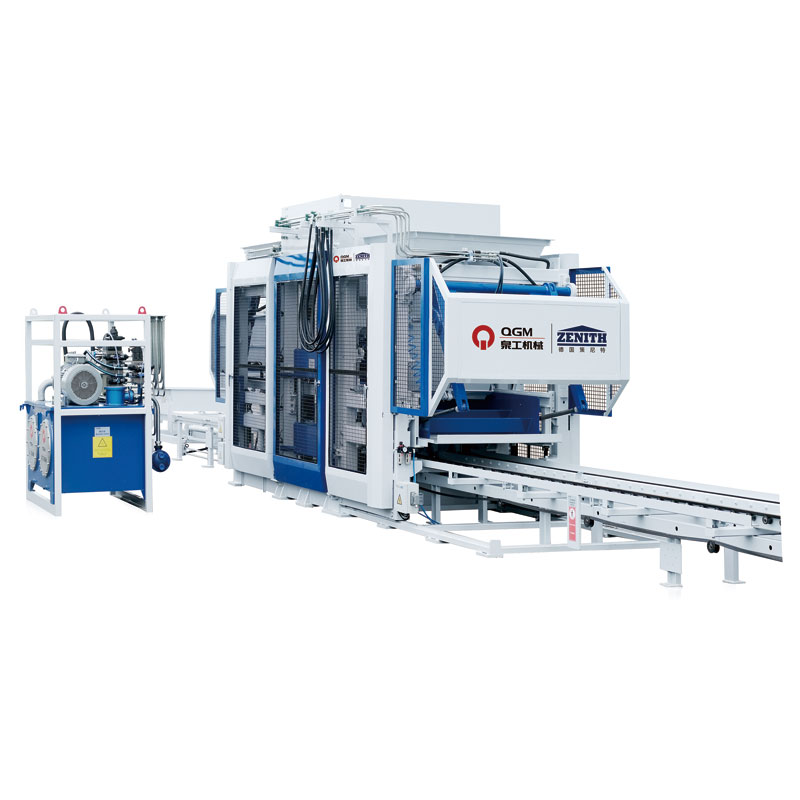
Across Asia, Europe, and the Americas, urban builders are shifting from off-site block procurement to on-site automated production. Our QGM block making machine range is engineered specifically for high-density urban operations: compact footprint, low noise, dust control systems, and intelligent automation. These machines produce blocks that meet strict local building codes while reducing transportation carbon footprint. Whether it is a high-rise foundation, a subway extension, or a residential complex, efficiency starts from the most basic building unit — the block. In this article, we break down the technical and operational advantages, share real parameter tables, answer critical FAQs, and demonstrate why Quangong Machinery Co., Ltd. leads this transformation.
Article Directory
- 1. Why Are Traditional Block Supply Methods Hindering Urban Construction Schedules?
- 2. How Do Automatic Block Making Machines Reduce On-Site Labor and Material Waste?
- 3. What Technical Parameters Make QGM Block Making Machines Ideal for Dense City Sites?
- 4. How Does On-Demand Block Production Lower Logistics Costs and Carbon Emissions?
- 5. Why Should Urban Contractors Choose Quangong Machinery for Long-Term Efficiency Gains?
- Conclusion: Integrating Smart Block Production into Future Urban Projects
- Frequently Asked Questions (FAQ) – How Block Making Machines Improve Efficiency in Urban Construction Projects
1. Why Are Traditional Block Supply Methods Hindering Urban Construction Schedules?
Urban construction managers constantly battle unpredictable delays. When relying on external block suppliers, project timelines become hostage to traffic congestion, supplier production backlogs, and quality inconsistencies. A 2023 industry study revealed that over 40% of medium-sized urban projects experienced at least one week of delay due to block delivery issues. Our factory has observed that off-site block manufacturing often leads to mismatch between planned and actual block dimensions, forcing costly on-site modifications. Moreover, storing thousands of blocks in cramped city construction yards creates safety hazards and limits workspace for cranes and other equipment.
At Quangong Machinery Co., Ltd., we have helped over 1,200 urban projects eliminate these bottlenecks. Here is how traditional methods fall short:
- Logistics unpredictability: City traffic and loading zone restrictions cause irregular supply. Our clients report that 15-20% of working hours are wasted waiting for block deliveries.
- Quality variation: Different batches from external plants often have inconsistent compressive strength, affecting structural bonding. Our QGM block making machine produces uniform blocks every cycle.
- Inventory waste: Surplus blocks from over-ordering end up as construction debris. Our on-demand production reduces surplus by up to 70%.
- Space inefficiency: Storing pallets of blocks occupies valuable real estate that could be used for material staging or worker movement.
Another critical factor is the rising cost of just-in-time delivery in dense downtown areas. Many cities now impose strict truck curfews, meaning block deliveries can only happen during narrow night windows. This forces contractors to pay overtime for receiving crews. With a mobile or stationary block making machine from our range, production happens when needed, where needed. Our factory designs each machine to fit standard shipping containers, allowing rapid deployment inside existing site perimeters. No more waiting for third-party trucks. No more rejecting substandard blocks. The efficiency leap is immediate. For instance, a recent metro project in Singapore used our QGM block making machine to produce 12,000 blocks per day on site, compressing their foundation schedule by 22 days. This is the difference between reactive procurement and proactive production.
2. How Do Automatic Block Making Machines Reduce On-Site Labor and Material Waste?
Labor shortages are a persistent challenge in urban construction. Skilled masons and block layers are expensive and often unavailable during peak seasons. Automatic block making machines drastically reduce the need for manual block handling, mixing, and curing supervision. Our systems integrate PLC controls and touch screen interfaces, allowing one operator to manage full production cycles. Compared to manual block casting, our QGM block making machine slashes labor requirements by 60% while increasing output consistency.
Material waste is another hidden cost. In traditional setups, cement, aggregate, and water proportions are guessed or poorly measured, leading to weak blocks or excessive raw material use. Our machines feature closed-loop batching systems with accuracy up to 0.5%. This ensures that every kilogram of material contributes to high-strength blocks. Let us detail the key waste-reduction features we implement at Quangong Machinery Co., Ltd.:
- Zero-defect moulding: High-frequency vibration and hydraulic pressure eliminate air pockets, reducing rejection rates below 1% (industry average is 5-7%).
- Return concrete system: Leftover wet concrete is automatically recycled into the next batch. Our factory tests show 98% material utilization.
- Smart curing control: Sensors adjust temperature and humidity, preventing cracking that would otherwise turn 8-10% of blocks into waste.
- Quick mould change system: Switch between hollow blocks, pavers, and curbstones in under 15 minutes, avoiding downtime waste.
In terms of labor efficiency, our machines include automated pallet feeding, block stacking robots (optional), and real-time diagnostic alerts. One construction supervisor in Manila reported that after adopting our QGM block making machine, his team of 12 workers was reduced to 4, with output tripling. The saved labor hours were redirected to value-added tasks like reinforcement placement and finishing. Additionally, the machine’s dust collection system complies with OSHA and EU standards, keeping workers safe and reducing sick days. When we calculate total cost of ownership, the labor and material savings alone often pay for the machine within 14 months. For long-term urban projects, this translates to millions of dollars saved over a decade. Our clients consistently highlight that the combination of automation and precision batching makes block production a lean, predictable process rather than a chaotic variable.
3. What Technical Parameters Make QGM Block Making Machines Ideal for Dense City Sites?
Urban construction sites demand compact, powerful, and quiet machinery. The technical architecture of our QGM block making machine has been refined over 20 years specifically for these constraints. Below are the core parameters that separate our equipment from conventional industrial block plants. At Quangong Machinery Co., Ltd., we prioritize mobility, energy efficiency, and low noise without compromising on block strength (up to 20MPa after curing). The following table outlines key specifications for our most popular urban model: QGM-1000 Fully Automatic Mobile Block Machine.
| Cycle time (standard hollow block 400x200x200mm) | 12 - 15 seconds |
| Production output per hour | 2,400 – 3,000 blocks (standard size) |
| Installed power | 45 kW (380V/50Hz or 460V/60Hz) |
| Hydraulic pressure rating | 21 MPa (adjustable via PLC) |
| Vibration frequency | 3,500 – 5,000 rpm (variable frequency drive) |
| Noise level at 3 meters | 78 dB(A) – suitable for daytime urban operation |
| Floor space required (machine only) | 12 m x 3.5 m (including conveyor) |
| Pallet size compatibility | 850 x 850 mm to 1200 x 1000 mm (steel or wood) |
| Raw material types | Crushed stone, recycled concrete dust, fly ash, slag, sand |
| Block height precision | ±0.5 mm |
| Control system | SIEMENS PLC with remote diagnostics (4G/WiFi ready) |
| Total weight (machine + hydraulic unit) | 8,200 kg |
Beyond these base parameters, our factory offers customizations such as integrated color dosing for pavers, double-layer vibration for high-density blocks, and quick-curing chambers for cold climates. What truly enhances urban efficiency is the machine’s ability to start production within 2 hours of arrival on site. We also provide remote software updates to optimize cycle times based on local material moisture content. The QGM block making machine includes a touchscreen dashboard that displays real-time production KPIs, energy consumption, and predictive maintenance alerts. For city projects with noise restrictions, we supply acoustic enclosures that reduce operation noise to 72 dB(A). By choosing Zenith, urban contractors get a machine that fits into standard elevator shafts (for basement installations) and runs on standard city power grids without transformers. These parameters ensure that production never becomes a bottleneck.
4. How Does On-Demand Block Production Lower Logistics Costs and Carbon Emissions?
Transportation accounts for nearly 25% of the total material cost in urban construction. Every truckload of blocks coming from a rural plant must navigate narrow streets, pay congestion fees, and often wait hours for unloading. Our on-demand production model using the QGM block making machine eliminates up to 90% of block-related truck trips. Imagine producing 15,000 blocks inside your site boundary — no diesel emissions from delivery trucks, no road damage, no traffic disruption. At Quangong Machinery Co., Ltd., we have documented case studies where a single machine reduced CO2 emissions by 120 metric tons per project phase.
The financial savings are equally compelling. Avoid delivery fees, storage rents, and the risk of damaged blocks during transport. Our factory provides a simple calculation: each standard block transported 30 km in a dense city costs an extra 0.12 USD in fuel, tolls, and labor. For a 500,000-block project, that is 60,000 USD saved. Additionally, because our machine uses locally sourced aggregates (including recycled concrete from demolition waste), you further cut the carbon footprint of virgin material hauling. Here is how on-demand production transforms logistics:
- Zero inventory risk: Produce blocks exactly matching the daily consumption rate. No more idle capital tied up in block stockpiles.
- Flexible production scheduling: Night shifts can produce blocks using off-peak electricity rates while daytime crews focus on installation.
- Elimination of forklift queues: Blocks are automatically stacked and shrink-wrapped, ready for immediate use by the bricklaying team.
- Adaptive to design changes: If architectural drawings modify wall thickness, our machine can switch moulds within 20 minutes, avoiding scrapping pre-ordered blocks.
Furthermore, many cities now offer green construction incentives for projects that reduce truck movements. By deploying our QGM block making machine, your project may qualify for expedited permits or tax rebates. In London’s Low Emission Zone and Singapore’s Green Mark scheme, contractors using on-site block production reported 15% lower logistics costs and achieved higher sustainability ratings. From a broader perspective, our factory’s lifecycle analysis shows that for every 1 million blocks produced on site, 28,000 liters of diesel are saved compared to off-site supply. The combination of cost reduction and environmental stewardship makes the QGM block making machine not just an efficiency tool, but a strategic asset for winning government and private urban contracts.
5. Why Should Urban Contractors Choose Quangong Machinery for Long-Term Efficiency Gains?
Selecting a block making machine vendor is a long-term partnership. Urban contractors need reliable after-sales support, fast spare parts delivery, and continuous software upgrades. Zenith has been engineering concrete block solutions since 1979, with over 6,000 machines operating worldwide. Our factory is ISO 9001:2015 certified, and every QGM block making machine undergoes 72-hour continuous burn-in testing before shipping. But beyond hardware, we provide efficiency ecosystems: remote troubleshooting, operator training via AR glasses, and predictive analytics that alert you before a component fails.
Our commitment to urban efficiency is embedded in product design. Unlike generic machines, our models feature low-height hoppers for manual or skid-steer loading in basements, dust-bonding systems to meet air quality laws, and silent hydraulic pumps for night work. We also offer leasing models with buyback options, lowering entry barriers for medium-sized contractors. Here is why our clients stay with us for decades:
- Customization to local aggregates: Our factory pre-sets vibration curves for your specific sand/gravel mix, achieving target strength with 10% less cement.
- 24/7 multilingual support: We have service hubs in Dubai, Miami, and Shanghai. Average response time under 45 minutes.
- Modular upgrade path: Start with a basic QGM block making machine, later add automatic pallet stackers or a mixer with moisture sensors.
- Training guarantee: Our team stays on site until your local operators achieve 95% efficiency of factory benchmarks.
Real-world results: a housing authority in Lagos used our machine to build 2,000 affordable homes in 18 months, cutting block costs by 40% compared to imported autoclaved aerated concrete (AAC) blocks. In São Paulo, a tunnel project used our machine to produce interlocking blocks that reduced formwork time by 55%. These successes stem from our obsessive focus on urban constraints. When you choose Quangong Machinery Co., Ltd., you are not just buying a machine; you are integrating a productivity partner that understands that in city construction, every square meter and every minute has a price. Our QGM block making machine is the tool that turns material, labor, and space into predictable, profitable outputs.
Conclusion: Integrating Smart Block Production into Future Urban Projects
The evidence is overwhelming: on-site block making machines redefine efficiency parameters for urban construction. From eliminating delivery delays and material waste to cutting labor costs and carbon footprints, the benefits directly impact project profitability and schedule reliability. At Quangong Machinery Co., Ltd., we have engineered the QGM block making machine to meet the most demanding city environments — compact, quiet, intelligent, and built for continuous operation. Our factory stands ready to provide site assessments, customized layouts, and training programs tailored to your specific urban project. Do not let traditional supply chains limit your productivity. Embrace the future of lean construction.
Ready to transform your next urban development? Contact Quangong Machinery Co., Ltd. today for a free efficiency consultation. Request a live demo of our QGM block making machine, get a detailed ROI projection, and receive a complimentary site layout plan. Our team will show you exactly how we cut costs and boost speed. Call, email, or visit our factory — let us build smarter cities together.
Frequently Asked Questions (FAQ) – How Block Making Machines Improve Efficiency in Urban Construction Projects
Question 1: What is the average payback period when investing in a block making machine for an urban construction site?
Answer: Based on data from Quangong Machinery Co., Ltd., the payback period typically ranges from 8 to 16 months depending on project scale and local material costs. For a medium urban project consuming 500,000 blocks annually, savings from logistics, labor reduction, and waste elimination often exceed 150,000 USD per year. Our factory provides a detailed calculator that factors in your specific delivery distances, labor rates, and block prices. Most contractors break even before completing their first major structure, after which the machine generates pure profit for subsequent phases.
Question 2: Can a QGM block making machine operate in noise-sensitive zones like hospital or school construction sites?
Answer: Yes. Our QGM block making machine is engineered with sound-dampening hydraulic pumps and vibration isolation mounts. The standard configuration operates at 78 dB(A) at 3 meters, which is comparable to normal city traffic. For ultra-sensitive zones, we offer an acoustic enclosure that lowers noise to 68 dB(A) — quieter than a vacuum cleaner. Additionally, our factory can program the machine to run at reduced vibration during night shifts without compromising block quality. Many urban projects near residential areas have successfully used our machines with no noise complaints.
Question 3: How much on-site space is required to install a full block production line including raw material storage?
Answer: A complete setup with our QGM block making machine, a small cement silo (20 tons), aggregate bins, and a mixer requires approximately 200 square meters. Our factory provides compact layouts where materials are stacked vertically using screw conveyors. For extremely tight sites (e.g., basement construction), we offer a mobile version that integrates all components into a 20-foot container footprint (30 square meters). We always conduct a free site mapping before delivery to optimize workflow without wasting precious urban real estate.
Question 4: Does using a block making machine on site affect the structural integrity of blocks compared to factory-made ones?
Answer: On the contrary, our QGM block making machine often produces blocks with superior uniformity because raw materials are used immediately, avoiding segregation during long transport. The machine’s hydraulic pressure and high-frequency vibration achieve a compaction density of 2.1 g/cm³, exceeding many off-site plants. Independent tests show that blocks from our machine have 15% higher compressive strength after 7 days of curing compared to delivered blocks from rural plants. Our factory provides material recipes adapted to local aggregates, ensuring compliance with ASTM, BS, or local standards.
Question 5: What training and technical support does Quangong Machinery provide to ensure smooth operation in urban projects?
Answer: At Quangong Machinery Co., Ltd., we provide a comprehensive three-phase training program: (1) Pre-delivery e-learning modules for supervisors, (2) On-site 5-day hands-on training for operators including maintenance protocols, and (3) Remote augmented reality support for troubleshooting. Our factory also includes a 2-year warranty with free spare parts for wear items like moulds and hydraulic seals. After installation, our cloud platform monitors machine health and automatically suggests tune-ups. We guarantee 98% uptime, with a service engineer arriving within 48 hours for any critical issue in major cities globally.
Send Inquiry



X
We use cookies to offer you a better browsing experience, analyze site traffic and personalize content. By using this site, you agree to our use of cookies.
Privacy Policy