

- English
 Esperanto
 Afrikaans
 Català
 שפה עברית
 Cymraeg
 Galego
 Latviešu
 icelandic
 ייִדיש
 беларускі
 Hrvatski
 Kreyòl ayisyen
 Shqiptar
 Malti
Malti lugha ya Kiswahili
 አማርኛ
አማርኛ Bosanski
 Frysk
Frysk ភាសាខ្មែរ
 ქართული
 ગુજરાતી
 Hausa
Hausa Кыргыз тили
 ಕನ್ನಡ
ಕನ್ನಡ Corsa
Corsa Kurdî
Kurdî മലയാളം
 Maori
Maori Монгол хэл
 Hmong
Hmong IsiXhosa
 Zulu
Zulu Punjabi
 پښتو
پښتو Chichewa
 Samoa
Samoa Sesotho
 සිංහල
සිංහල Gàidhlig
 Cebuano
 Somali
 Тоҷикӣ
 O'zbek
 Hawaiian
 سنڌي
سنڌي Shinra
 Հայերեն
 Igbo
Igbo Sundanese
 Lëtzebuergesch
 Malagasy
 Yoruba
 অসমীয়া
 ଓଡିଆ
ଓଡିଆ Español
 Português
 русский
 Français
 日本語
日本語 Deutsch
 tiếng Việt
 Italiano
 Nederlands
 ภาษาไทย
 Polski
 한국어
한국어 Svenska
 magyar
 Malay
Malay বাংলা ভাষার
 Dansk
Dansk Suomi
Suomi हिन्दी
 Pilipino
 Türkçe
 Gaeilge
 العربية
 Indonesia
 Norsk
Norsk تمل
تمل český
český ελληνικά
 український
 Javanese
 فارسی
فارسی தமிழ்
தமிழ் తెలుగు
 नेपाली
 Burmese
 български
 ລາວ
ລາວ Latine
 Қазақша
 Euskal
 Azərbaycan
 Slovenský jazyk
 Македонски
 Lietuvos
 Eesti Keel
 Română
 Slovenski
 मराठी
मराठी Srpski језик

How Does Auxiliary Machinery Support Sustainable Manufacturing Practices?
Sustainable manufacturing is no longer a marketing concept. It is a measurable operational strategy driven by energy efficiency, material optimization, emission control, and lifecycle cost management. In modern production lines, Auxiliary Machinery plays a decisive role in achieving these targets. From material feeding systems to dust collection units, from automatic batching systems to curing chambers, each supporting system directly influences production stability, energy consumption, and environmental impact.
At Quangong Machinery Co., Ltd., we design and manufacture high-performance Auxiliary Machinery engineered to improve efficiency while reducing waste and carbon footprint. By integrating smart control systems, optimized power configurations, and durable structural components, our factory helps global manufacturers align with sustainability goals without sacrificing output. This article explores how Auxiliary Machinery supports sustainable manufacturing practices, backed by technical parameters, structured data, and practical implementation strategies.
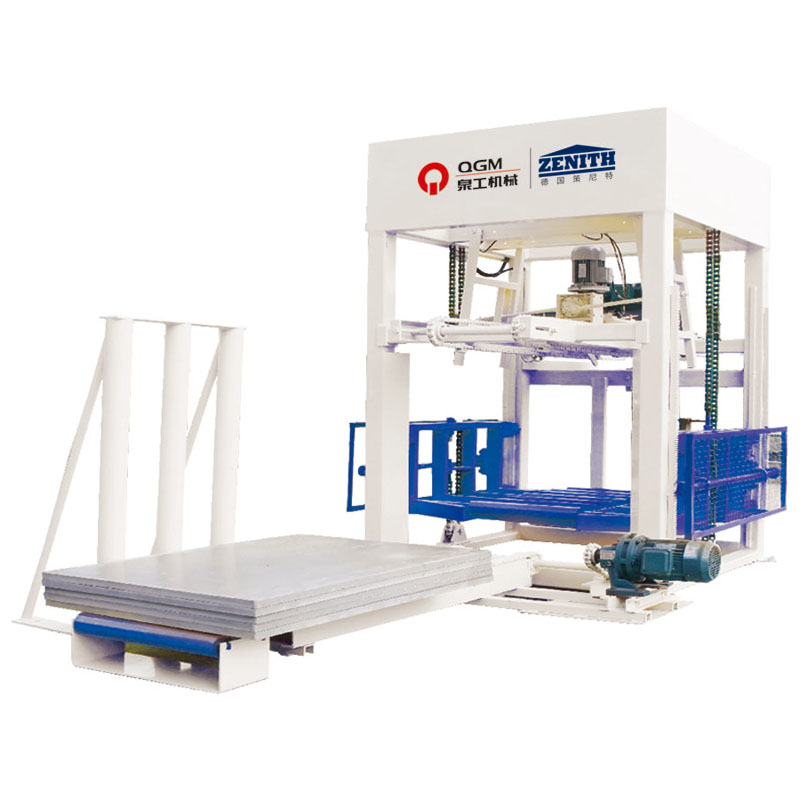
Table of Contents
- What Role Does Auxiliary Machinery Play in Sustainable Manufacturing?
- How Does Auxiliary Machinery Reduce Energy Consumption and Carbon Emissions?
- Why Does Smart Integration of Auxiliary Machinery Improve Resource Efficiency?
- Conclusion
- FAQ
What Role Does Auxiliary Machinery Play in Sustainable Manufacturing?
Sustainable manufacturing depends on the performance of every supporting system within a production line. While main production equipment often receives attention, Auxiliary Machinery forms the operational backbone that ensures environmental compliance, material efficiency, and long-term reliability. At Quangong Machinery Co., Ltd., we focus on engineering Auxiliary Machinery that enhances productivity while minimizing environmental impact. Our systems are widely applied in block production lines, concrete product plants, and industrial material processing facilities.
Core Functional Categories of Auxiliary Machinery
- Automatic batching and weighing systems
- Material conveying systems
- Dust collection and filtration systems
- Mixing support units
- Stacking and palletizing systems
- Steam curing chambers
- Water recycling and slurry recovery systems
Technical Parameters of Key Equipment
| Equipment Type | Capacity Range | Power Consumption | Control System | Environmental Feature |
| Automatic Batching System | 60 to 240 m3 per hour | 18 to 45 kW | PLC Intelligent Control | Precise material proportioning reduces waste |
| Dust Collection Unit | 5000 to 20000 m3 per hour airflow | 7.5 to 22 kW | Pulse Jet Control | High efficiency filtration above 99 percent |
| Material Conveyor | 20 to 120 tons per hour | 5.5 to 30 kW | Frequency Control | Energy saving motor configuration |
| Steam Curing Chamber | Customizable volume | Energy optimized heat exchange | Temperature Auto Regulation | Reduced curing time and energy efficiency |
How These Systems Support Sustainability
Material Accuracy and Waste Reduction
- Precise weighing systems reduce overuse of cement and aggregates
- Automated feeding prevents manual errors
- Real-time data monitoring ensures optimal input ratios
Energy Optimization
- Frequency-controlled motors adjust power output dynamically
- Low-resistance conveyor designs reduce load
- Optimized curing cycles minimize heat loss
Environmental Protection
- High-efficiency dust filtration reduces airborne particles
- Closed-loop water recycling systems limit wastewater discharge
- Low-noise operation improves workplace conditions
By integrating these systems, our factory ensures that production lines achieve consistent output while aligning with green manufacturing policies. Quangong Machinery Co., Ltd. continuously improves design structures to increase durability, ensuring a longer service life and lower maintenance frequency. Sustainable manufacturing requires stable operations, and our equipment is engineered with reinforced steel frames, corrosion-resistant coatings, and modular layouts to support long-term use.
How Does Auxiliary Machinery Reduce Energy Consumption and Carbon Emissions?
Energy efficiency is central to sustainable production. Auxiliary Machinery directly impacts electricity usage, fuel consumption, and overall carbon footprint. When properly configured, supporting equipment can reduce operational energy consumption by up to 20 percent. Quangong Machinery Co., Ltd. implements multiple strategies to reduce environmental impact through intelligent system design.
Energy Saving Motor Systems
- IE3 and IE4 efficiency grade motors
- Variable frequency drives for load-based adjustment
- Soft start systems reducing peak current load
Heat Recovery in Steam Curing
- Insulated chamber panels to prevent heat loss
- Automated temperature control sensors
- Recycled condensate water utilization
Dust Control and Air Quality Management
| Parameter | Standard Specification | Sustainability Benefit |
| Filtration Efficiency | Above 99 percent | Reduced particulate emissions |
| Filter Material | High-density polyester fiber | Long service life and lower replacement frequency |
| Cleaning Method | Pulse jet automatic cleaning | Maintains efficiency without excess energy use |
Carbon Footprint Reduction Strategies
- Shortened production cycle reduces electricity per unit output
- Precision material dosing minimizes cement waste
- Reduced rework lowers raw material consumption
- Digital monitoring prevents energy leakage
Our factory designs each Auxiliary Machinery unit with lifecycle efficiency in mind. By combining mechanical durability with intelligent control systems, we ensure lower downtime and fewer component replacements. Quangong Machinery Co., Ltd. integrates IoT-based monitoring into advanced systems, enabling predictive maintenance and further reducing unnecessary energy usage.
Through these measures, manufacturers can meet environmental compliance standards while improving operational margins. Auxiliary Machinery is not an accessory; it is a strategic investment in sustainable development.
Why Does Smart Integration of Auxiliary Machinery Improve Resource Efficiency?
True sustainability requires system integration. Standalone equipment cannot deliver maximum environmental benefit unless coordinated within a unified production structure. Smart integration of Auxiliary Machinery allows real-time data communication, adaptive performance adjustment, and resource optimization. Quangong Machinery Co., Ltd. emphasizes system compatibility across all supporting equipment. Our integrated solutions ensure stable communication between batching, conveying, mixing, and curing systems.
Digital Control and Data Monitoring
- Central PLC management systems
- Touchscreen human machine interface
- Production data logging and export capability
- Remote diagnostic access
Resource Efficiency Improvements
- Real-time raw material consumption tracking
- Automatic error detection and correction
- Optimized cycle timing for reduced idle periods
- Improved production yield rates
Durability and Long Service Life
| Structural Component | Material | Design Feature | Benefit |
| Main Frame | High-strength carbon steel | Reinforced welding structure | Extended operational lifespan |
| Surface Coating | Anti-corrosion epoxy layer | Multi-layer protection | Resistance to harsh environments |
| Electrical Cabinet | Dustproof sealed design | IP rated enclosure | Reduced maintenance frequency |
Our factory prioritizes modular design, allowing manufacturers to upgrade individual components without replacing entire systems. This approach reduces material waste and capital expenditure. By selecting Auxiliary Machinery from Quangong Machinery Co., Ltd., manufacturers gain access to scalable solutions that align with long-term sustainability strategies. Integration enhances traceability, supports environmental audits, and improves operational transparency. These factors are essential for companies seeking compliance with international environmental standards.
Conclusion
Sustainable manufacturing is achieved through systematic efficiency, not isolated improvements. Auxiliary Machinery enhances precision, reduces waste, lowers emissions, and improves lifecycle durability. By combining intelligent control systems, energy-saving components, and durable structural design, manufacturers can significantly reduce environmental impact while maintaining production capacity.
Quangong Machinery Co., Ltd. remains committed to delivering high-performance Auxiliary Machinery tailored to global industrial needs. With advanced engineering, optimized energy management, and scalable integration solutions, our factory supports clients in building environmentally responsible production lines. If you are planning to upgrade your facility with sustainable and energy-efficient Auxiliary Machinery, contact Quangong Machinery Co., Ltd. today. Our technical team is ready to provide customized solutions that enhance productivity while supporting long-term environmental goals.
FAQ
Q1: How Does Auxiliary Machinery Support Sustainable Manufacturing Practices in Concrete Production?
Auxiliary Machinery ensures accurate batching, efficient conveying, dust filtration, and optimized curing cycles, which collectively reduce material waste, energy use, and emissions while maintaining stable output quality.
Q2: How Does Auxiliary Machinery Support Sustainable Manufacturing Practices by Reducing Energy Consumption?
Through variable frequency drives, high-efficiency motors, automated temperature control, and predictive maintenance systems, energy usage is adjusted according to real-time production demand, minimizing unnecessary electricity consumption.
Q3: How Does Auxiliary Machinery Support Sustainable Manufacturing Practices in Waste Management?
Integrated dust collectors and water recycling systems capture airborne particles and recover wastewater, preventing environmental contamination and enabling resource reuse within the production cycle.
Q4: How Does Auxiliary Machinery Support Sustainable Manufacturing Practices Over the Equipment Lifecycle?
Durable materials, corrosion-resistant coatings, and modular structures extend service life, reduce replacement frequency, and lower overall resource consumption throughout the equipment lifecycle.
Q5: How Does Auxiliary Machinery Support Sustainable Manufacturing Practices Through Smart Integration?
Centralized PLC systems and data monitoring tools enable real-time optimization, reduce idle time, prevent overuse of raw materials, and ensure traceable performance metrics aligned with sustainability standards.
Send Inquiry



X
We use cookies to offer you a better browsing experience, analyze site traffic and personalize content. By using this site, you agree to our use of cookies.
Privacy Policy