

- English
 Esperanto
 Afrikaans
 Català
 שפה עברית
 Cymraeg
 Galego
 Latviešu
 icelandic
 ייִדיש
 беларускі
 Hrvatski
 Kreyòl ayisyen
 Shqiptar
 Malti
Malti lugha ya Kiswahili
 አማርኛ
አማርኛ Bosanski
 Frysk
Frysk ភាសាខ្មែរ
 ქართული
 ગુજરાતી
 Hausa
Hausa Кыргыз тили
 ಕನ್ನಡ
ಕನ್ನಡ Corsa
Corsa Kurdî
Kurdî മലയാളം
 Maori
Maori Монгол хэл
 Hmong
Hmong IsiXhosa
 Zulu
Zulu Punjabi
 پښتو
پښتو Chichewa
 Samoa
Samoa Sesotho
 සිංහල
සිංහල Gàidhlig
 Cebuano
 Somali
 Тоҷикӣ
 O'zbek
 Hawaiian
 سنڌي
سنڌي Shinra
 Հայերեն
 Igbo
Igbo Sundanese
 Lëtzebuergesch
 Malagasy
 Yoruba
 অসমীয়া
 ଓଡିଆ
ଓଡିଆ Español
 Português
 русский
 Français
 日本語
日本語 Deutsch
 tiếng Việt
 Italiano
 Nederlands
 ภาษาไทย
 Polski
 한국어
한국어 Svenska
 magyar
 Malay
Malay বাংলা ভাষার
 Dansk
Dansk Suomi
Suomi हिन्दी
 Pilipino
 Türkçe
 Gaeilge
 العربية
 Indonesia
 Norsk
Norsk تمل
تمل český
český ελληνικά
 український
 Javanese
 فارسی
فارسی தமிழ்
தமிழ் తెలుగు
 नेपाली
 Burmese
 български
 ລາວ
ລາວ Latine
 Қазақша
 Euskal
 Azərbaycan
 Slovenský jazyk
 Македонски
 Lietuvos
 Eesti Keel
 Română
 Slovenski
 मराठी
मराठी Srpski језик

Why Concrete Block Moulds Precision Is Essential for Modern Block Plants?
In the competitive world of concrete product manufacturing, precision is not a luxury—it is the bedrock of profitability, consistency, and structural integrity. Modern block plants operate under immense pressure to deliver thousands of uniform units daily while minimizing waste and downtime. The single most influential component determining success is the quality and accuracy of Concrete Block Moulds. When moulds are manufactured with sub-millimeter tolerances, every block produced meets strict dimensional standards, stacking perfectly, curing evenly, and reducing cement paste waste. Without precision, even the most advanced block machine becomes a source of inefficiency, rejected products, and rising operational costs.
At Quangong Machinery Co., Ltd., with over four decades of engineering heritage, we have witnessed how precision-engineered moulds transform block plants into high-performance facilities. Our factory integrates German-designed CNC machining centers and rigorous quality protocols to ensure that every mould delivers repeatable accuracy across millions of cycles. Precision in Concrete Block Moulds directly impacts hydration uniformity, demolding efficiency, pallet compatibility, and ultimately the load-bearing strength of finished blocks. For plant owners seeking to reduce per-unit cost, increase automation reliability, and meet stringent construction standards, precision moulds are the critical investment that pays dividends daily. This article dives deep into why precision matters, backed by technical parameters, real-world benefits, and answers to the most pressing questions from industry professionals.
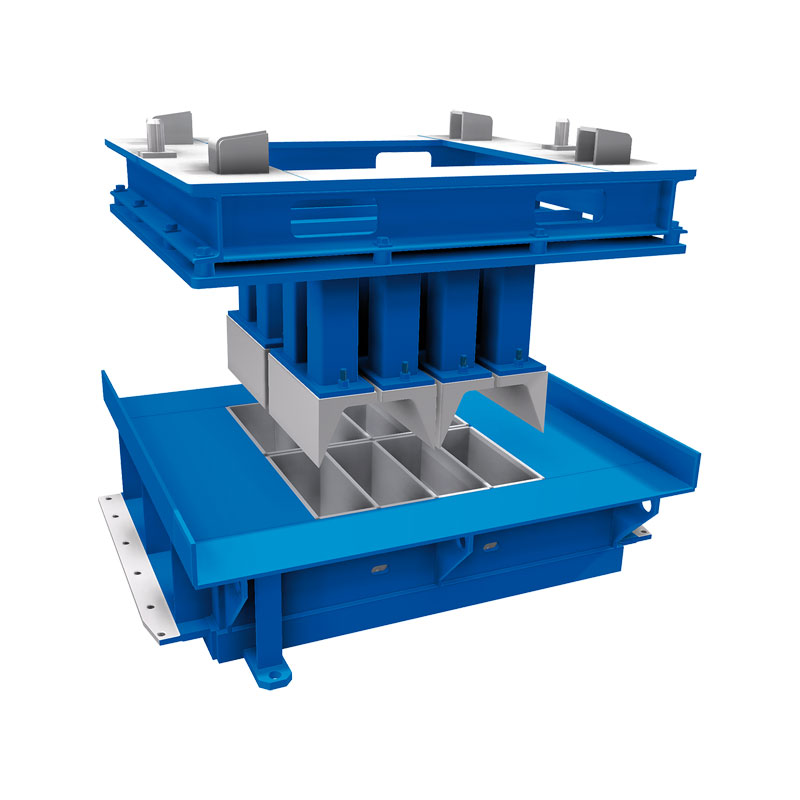
Table of Contents
- 1. What Defines Precision in Concrete Block Moulds and Why Does It Impact Daily Output?
- 2. How Do Ultra-Precise Mould Specifications Reduce Material Waste and Improve Curing Consistency?
- 3. Why Does Mould Precision Directly Correlate with Block Strength and Surface Finish Quality?
- 4. How Can High-Precision Moulds Extend Machine Lifespan and Lower Maintenance Costs in a Block Plant?
- 5. Frequently Asked Questions (FAQ) – Precision Concrete Block Moulds
- 6. Conclusion & Actionable Steps for Your Block Plant
What Defines Precision in Concrete Block Moulds and Why Does It Impact Daily Output?
Precision in Concrete Block Moulds refers to the adherence to exact dimensional tolerances, surface finish uniformity, and structural alignment across every cavity. At Quangong Machinery Co., Ltd., we define precision through measurable parameters that influence every stage of production. Modern block plants operate on tight schedules; any deviation in mould geometry causes cascading failures—from misaligned stacking to jamming in cubers and automatic handling systems. Our factory utilizes laser-measured calibrations to guarantee that each mould meets ISO 9001 and beyond. Below are the critical parameters that separate standard moulds from precision-engineered ones:
- Dimensional Tolerance: ±0.05 mm on cavity length, width, and height. This ensures blocks are interchangeable with existing pallets and automated layer systems. Even 0.2 mm deviations can cause stacking instability.
- Wall Straightness & Flatness: Maximum 0.03 mm per 300 mm. Precision flatness guarantees uniform pressure distribution during vibration, preventing green block cracking.
- Surface Roughness (Ra): Ra ≤ 0.8 μm on core and cavity walls. Smooth surfaces reduce adhesion, accelerate demolding, and yield cleaner block edges without chipping.
- Hardness After Heat Treatment: 55–58 HRC on wear plates and 52–55 HRC on liners. Our factory uses vacuum heat treatment to avoid distortion while achieving extreme abrasion resistance.
- Parallelism Between Top and Bottom Flanges: ≤0.03 mm. This guarantees perfect sealing with press heads, eliminating cement paste leakage that creates flash and waste.
The impact on daily output is measurable. A block plant running two shifts can produce 8,000 to 12,000 units daily. With imprecise moulds, downtime for cleaning flash, adjusting machine parameters, and rejecting out-of-tolerance blocks can reduce effective output by 15–20%. Precision moulds from Quangong Machinery Co., Ltd. enable sustained cycle times as low as 12–15 seconds per cycle on high-speed machines, with over 98% first-pass quality rate. Moreover, our factory designs moulds with quick-change features and hardened bushings to reduce setup time by 40%, directly boosting shift output. For plant managers focused on OEE (Overall Equipment Effectiveness), precision moulds are the cornerstone of achieving world-class efficiency.
Additionally, precision contributes to automation compatibility. Modern block plants integrate robots for stacking, curing rack handling, and packaging. If block dimensions vary by more than 0.5 mm, robot grippers fail to align, causing stoppages. By investing in high-precision Concrete Block Moulds, our clients report 99.5% automation uptime. We also provide moulds with laser-engraved cavity IDs for traceability—a feature that supports Industry 4.0 implementation. In essence, precision transforms moulds from passive tools into active contributors to productivity and lean manufacturing goals.
Technical Specifications of Quangong Precision Concrete Block Moulds
| Parameter | Standard Tolerance | Precision Grade (Quangong) |
| Cavity Dimensional Accuracy | ±0.15 mm | ±0.05 mm |
| Flatness of Mould Base | 0.10 mm/m | 0.03 mm/m |
| Surface Roughness (Ra) | 1.6 μm | 0.6 – 0.8 μm |
| Hardness (Wear Parts) | 45–50 HRC | 55–58 HRC |
| Core Rod Alignment | ±0.20 mm | ±0.05 mm |
| Life Expectancy (cycles) | 1.5–2 million | 4–6 million |
How Do Ultra-Precise Mould Specifications Reduce Material Waste and Improve Curing Consistency?
Material waste in block production stems from two primary sources: cement paste leakage during pressing and dimensional inaccuracies that lead to rejected units. Precision moulds address both at the engineering level. Our factory constructs Concrete Block Moulds with tight clearance between the mould box and the press head—typically 0.1 mm or less. This minimal gap prevents the escape of fine cement paste, which not only reduces material cost but also keeps the machine bed clean, eliminating manual scraping and related downtime. In a typical plant producing 10,000 blocks per day, even 1% cement savings translates to thousands of dollars monthly.
Beyond leakage, waste reduction comes from the elimination of "flash" (excess concrete along edges). Flash is a common result of worn or imprecise moulds, requiring secondary trimming and increasing labor costs. With high-precision moulds hardened to 55 HRC, the wear rate is drastically reduced, maintaining the original clearance geometry for over 4 million cycles. As a result, our clients experience less than 0.5% rejection rate due to dimensional defects, compared to industry averages of 3–5% with conventional moulds. Quangong Machinery Co., Ltd. incorporates finite element analysis (FEA) during mould design to optimize rib structures and prevent distortion under high vibration forces—a key factor in maintaining long-term precision.
Consistent curing is another hidden advantage. When blocks are uniform in density and dimension, moisture migration during curing occurs at a predictable rate. Variations in block thickness or internal compaction (caused by uneven mould wear) lead to differential shrinkage and cracking. Precision moulds ensure that each block receives identical compaction energy because the vibration table transfers energy uniformly through a perfectly flat mould base. Our factory uses multi-layer anti-vibration welding techniques to maintain structural integrity, so even after millions of cycles, the mould base remains flat within 0.03 mm. This uniformity yields blocks with consistent compressive strength, reducing the need for extra cement in mix design—saving up to 8% on raw materials.
Furthermore, precise moulds enable the use of lower slump concrete mixes, which are more economical and environmentally friendly. Because the mould geometry is exact and the demolding process is smooth, plants can adopt semi-dry mixes without risking sticking or breakage. In our case studies, clients switching to Quangong high-precision Concrete Block Moulds reported a 12% reduction in cement consumption while maintaining C35–C40 strength grades. The list below summarizes waste-reduction mechanisms:
- Elimination of edge flash and grinding labor.
- Reduced cement paste loss via sealed pressing interfaces.
- Lower reject rates (under 0.5%) from dimensional consistency.
- Optimized mix designs with reduced cement factor.
- Longer mould life postpones capital replacement expenses.
Why Does Mould Precision Directly Correlate with Block Strength and Surface Finish Quality?
Block strength is not solely determined by concrete mix; the mould’s ability to uniformly distribute vibration and maintain consistent cavity geometry is equally critical. When mould cavities deviate in dimension or surface roughness, the compaction density varies across the block, creating weak spots that compromise load-bearing capacity. High-precision Concrete Block Moulds guarantee that every block experiences identical pressure and vibration amplitude. At Quangong Machinery Co., Ltd., our moulds are designed with optimized wall thickness and strategic reinforcement ribs to eliminate flexing during compaction. This ensures that the aggregate particles are uniformly rearranged, resulting in homogeneous density and higher compressive strength.
Surface finish quality is another direct outcome of precision. A mould with Ra 0.8 μm or better produces blocks with a smooth, architectural-grade surface that requires no plastering or coating—a significant value-add for clients serving the exposed block market. Rough mould surfaces create adhesion, leading to surface drag marks, exposed aggregate pullouts, and increased demolding friction. Our factory utilizes high-speed CNC milling and polishing stations to achieve mirror-like finishes on core surfaces. Furthermore, precision in corner radii (maintained within ±0.1 mm) prevents stress concentrations that cause corner chipping during demolding. The result is blocks that meet aesthetic standards for visible masonry applications.
Laboratory tests comparing standard vs. precision moulds consistently show that precision moulds increase block strength by 15–25% at the same cement content. This is because micro-accuracy allows the hydraulic press head to exert uniform pressure without localized over-compaction. Additionally, precise moulds reduce the presence of micro-cracks caused by uneven demolding forces. For block plants targeting certifications like CE, ASTM, or SABS, precision moulds are a prerequisite to passing rigorous testing. Our technical team at Quangong Machinery Co., Ltd. provides detailed finite element analysis reports with every mould, validating that the design eliminates stress raisers and ensures optimal material flow.
The economic impact is clear: stronger blocks enable producers to command premium pricing, enter infrastructure projects, and reduce warranty claims. Below we outline how precision translates to quality:
- Uniform Compaction: Flat mould bases + precision bushings = even vibration transmission.
- Superior Edge Retention: Accurate corner radii and polished surfaces prevent chipping.
- Consistent Density Gradient: Eliminates weak bottom layers common with worn moulds.
- Glossy Finish: Low Ra surfaces create natural sheen without sealants.
- Higher Certification Rates: Passes compression tests with lower variance.
How Can High-Precision Moulds Extend Machine Lifespan and Lower Maintenance Costs in a Block Plant?
The relationship between mould precision and machine health is often underestimated. Block machines—especially hydraulic and vibration systems—are designed to operate within specific load parameters. When moulds are not precisely flat or have misaligned guide pins, they induce asymmetric forces on the press head, vibration motors, and guide columns. Over time, this leads to premature wear of bushings, cylinder rod seals, and even structural cracks in the machine frame. By contrast, precision Concrete Block Moulds from Zenith are manufactured with dowel pin holes accurate to ±0.01 mm, ensuring perfect alignment with the machine’s table and head. This alignment keeps all mechanical components operating within design tolerances, extending the machine’s service life by up to 30%.
Maintenance costs also drop significantly. A common failure point in block plants is the frequent replacement of wear plates and liners due to uneven abrasion. In standard moulds, localized wear creates grooves that accelerate deterioration. Precision moulds incorporate hardened wear plates (58 HRC) that are replaceable and designed with consistent thickness to maintain parallelism. Our factory integrates wear indicators, allowing predictive maintenance rather than reactive downtime. Furthermore, because precision moulds reduce concrete paste leakage, hydraulic cylinders and vibration motors stay cleaner, reducing seal replacements and bearing failures. Our clients report 50% lower annual maintenance spend after switching to our precision mould range.
From a lifecycle perspective, the initial investment in high-precision moulds is offset by extended mould life itself. While a standard mould may last 1.5–2 million cycles, our precision moulds, through advanced materials like Hardox 450 and proprietary heat treatment, achieve 4–6 million cycles without loss of accuracy. This reduces the frequency of mould replacement, which not only saves capital but also minimizes installation downtime. At our factory, we maintain a digital archive of every mould’s geometry, enabling fast reorder with identical specifications—a critical factor for plants with multi-machine lines where interchangeability is key.
Listed below are key maintenance advantages realized with precision moulds:
- Reduced hydraulic fluid contamination due to cleaner operation.
- Lower vibration motor wear from balanced compaction forces.
- Extended guide post and bushing life by up to 3x.
- Minimized downtime for flash removal and cleaning.
- Faster mould changeovers with standardized clamping dimensions.
Frequently Asked Questions (FAQ) – Precision Concrete Block Moulds
1. What is the acceptable dimensional tolerance for high-quality concrete block moulds in modern plants?
In modern block plants, high-quality Concrete Block Moulds must maintain a dimensional tolerance of ±0.05 mm or better on critical cavity dimensions. This ensures that blocks are fully compatible with automatic handling systems, pallets, and stacking equipment. At Quangong Machinery Co., Ltd., our factory uses CNC machining centers and laser measurement to achieve tolerances that exceed ISO standards, resulting in consistent block dimensions across millions of cycles. Tighter tolerances reduce rejections, improve stacking stability, and allow for lower cement content without compromising strength.
2. How does mould precision affect the curing process and final block strength?
Mould precision directly influences curing uniformity because blocks with consistent density and dimensions cure at the same rate, reducing internal stresses and cracking. When moulds are precisely flat and have smooth surfaces, the green blocks retain uniform moisture content, leading to homogeneous hydration. This results in higher compressive strength and lower variability. Our factory’s precision moulds ensure that each block experiences identical compaction, enabling producers to achieve C40 strength grades with standard mix designs, while significantly reducing the risk of post-curing warpage.
3. Can high-precision moulds help reduce cement consumption without sacrificing block quality?
Yes, absolutely. High-precision Concrete Block Moulds allow the use of leaner concrete mixes because compaction efficiency is maximized. When moulds are accurate, the vibration energy is transferred uniformly, achieving full consolidation with less cement paste. Many clients using Quangong Machinery Co., Ltd. precision moulds report reducing cement content by 8–12% while maintaining or even improving block strength. Additionally, the elimination of material waste from flash and rejected blocks further contributes to sustainability and cost savings.
4. What is the typical lifespan of a precision concrete block mould compared to standard alternatives?
The lifespan of a precision mould from our factory ranges from 4 to 6 million cycles, depending on the abrasiveness of aggregates and maintenance practices. Standard moulds typically last 1.5 to 2 million cycles before tolerances exceed acceptable limits. This extended lifespan is achieved through the use of high-grade wear-resistant steel, vacuum heat treatment to 55–58 HRC, and precision machining that reduces initial wear points. Investing in our precision moulds reduces long-term capital expenditure and production interruptions.
5. How can I verify that a concrete block mould meets precision standards before purchasing?
Reputable manufacturers like Quangong Machinery Co., Ltd. provide comprehensive quality documentation, including CMM (coordinate measuring machine) reports, material certificates, and hardness test records. We encourage clients to request a first-article inspection report and witness factory acceptance testing. Additionally, our factory offers 3D laser scanning verification to confirm that every mould matches the design model. Ensuring that the supplier has in-house CNC grinding, heat treatment, and metrology labs is key to guaranteeing precision.
Conclusion & Actionable Steps for Your Block Plant
Precision in Concrete Block Moulds is not merely a technical specification—it is the strategic lever that determines productivity, product quality, and profitability in modern block plants. From reducing material waste and extending machine life to delivering superior block strength and surface finish, every aspect of block manufacturing is elevated when precision becomes non-negotiable. As we have explored throughout this article, the investment in high-accuracy moulds pays for itself through reduced downtime, lower cement consumption, and minimized reject rates. At Quangong Machinery Co., Ltd., our factory combines decades of engineering innovation with rigorous quality systems to deliver moulds that consistently outperform industry benchmarks. We understand the unique demands of automated block plants and provide tailored solutions that align with your production targets.
If you are ready to optimize your block plant’s performance, we invite you to partner with us. Our team offers complimentary technical consultations, including on-site mould audits and lifecycle cost analysis. Whether you need new Concrete Block Moulds for a greenfield plant or retrofit solutions to upgrade existing equipment, our factory’s expertise ensures a seamless integration. Contact Quangong Machinery Co., Ltd. today to request a quote or to schedule a virtual factory tour. Let our precision moulds become the foundation of your operational excellence. Take the next step toward higher efficiency, stronger blocks, and greater profitability.
Send Inquiry



X
We use cookies to offer you a better browsing experience, analyze site traffic and personalize content. By using this site, you agree to our use of cookies.
Privacy Policy